PFAS-Free Certification for Nonfood Compounds and Food Equipment Materials

What are PFAS?
Are you aware that PFAS, often called "forever chemicals," could be in your food processing and packaging materials? If your product is free from these harmful substances, it could give you a competitive edge while ensuring a safer choice for your buyers, end-users or consumers.
PFAS – or per- and polyfluoroalkyl substances, are a group of synthetic or man-made materials that resist degradation. Some PFAS have been used in diverse consumer goods and industrial applications for decades. Known as “forever chemicals”, which build up (bioaccumulate) in the environment, there are many thousands of PFAS, which can contaminate ground water, surface water, soil, indoor air and dust.
PFAS in food processing and food equipment materials
PFAS exposure can occur through the contamination of the food we eat or the water we drink. Additionally, PFAS can be present in materials used in food processing, preparation, packaging and cleaning. Valued for their oil and water repellant (hydrophobic and lipophobic) properties, PFAS are often used to make stain resistant, non-stick, water repellant or grease proof products including:
- 1
Consumer goods:
- Nonstick cookware
- Food packaging for bags, sandwich wrappers and takeout containers
- Cleaners and sanitizers in the home.
- 2
Food equipment materials:
- Sealants
- Adhesives
- O-rings/gaskets
- Valves
- Tubing
- Coatings.
- 3
Food production and processing:
- Lubricants for use in contact with food, such as for anti-rust, release agent purposes or during the operation of machine parts and equipment.
- Cleaners
- Hand cleaners
- Sanitizers.
Are PFAS harmful?
Scientific opinion has identified a wide range of health risks from the presence of these substances. Some PFAS are known to be carcinogenic, harmful to our reproduction and immune systems, or can increase the risk of thyroid disease.
What are PFAS food regulations?
PFAS regulations for food equipment, processing and packaging vary around the world, and from state to state in the US. If you’re a manufacturer looking to protect current markets or enter new ones (such as the US or Europe), it’s important to check how PFAS in food preparation and processing is regulated. You may need to source or develop alternative materials as a result.
Learn about EU and PFAS here
Discover US and PFAS in food here
What is PFAS-free certification for food processing or food equipment materials?
As a manufacturer looking to build resilience in your product offering, NSF PFAS-free certification validates your nonfood compounds or food equipment materials do not contain any intentionally added PFAS*. If you’re looking to certify PFAS-free food-grade lubricants, PFAS-free cleaning products or PFAS-free O-rings for food processing, for example, we’re ready to get you started.
More than a single test report, NSF PFAS-free certified products are retested every three years, and are accompanied by either a combined or individual certification mark, signifying compliance to the guideline. This can provide additional peace of mind for your buyers and end users.
Designed by food safety specialists, NSF Certification Guideline 537, PFAS-free products for non-food compounds and food equipment materials, is based on industry needs, in-depth food industry knowledge and decades of standards development.
In order to qualify for PFAS-free certification:
For nonfood compounds: Your products must be registered with NSF as a Nonfood Compound, or certified by NSF to ISO 21469, Lubricants with Incidental Product Contact.
For food equipment materials: Your products must be certified by NSF to Standard 51, Food Equipment Materials.
Steps to PFAS-free certification
- Contact us and provide the relevant documentation for your product(s).
- We’ll conduct a:
- Formulation review and testing setup
- Label review
- Total fluorine and total organic fluorine test
- Quality control check on the project and related documents.
- Following a successful outcome:
- Your NSF online listing (or NSF White Book™ listing for nonfood compounds) will be updated to include your new certificate.
- You will receive authorization to apply the corresponding certification mark on your products.
- Continued compliance for extra peace of mind
- We’ll request an annual attestation is signed by you (the manufacturer) confirming your formulation has not changed.
- We’ll conduct total fluorine and total organic fluorine testing every three years.
Why certify with NSF?
With environmental safety regulations increasing, and growing pressure to prove your products are PFAS-free, certify your nonfood compounds or food equipment materials with NSF.
Backed by decades of specialist food industry knowledge and standards development, NSF PFAS-free certification aligns with growing regulatory demands and proves your products meet top safety standards.
NSF PFAS-free certification sets your products apart, supports your commitment to evolving regulations, and can open doors to new markets.
NSF China PFAS-Free Certification
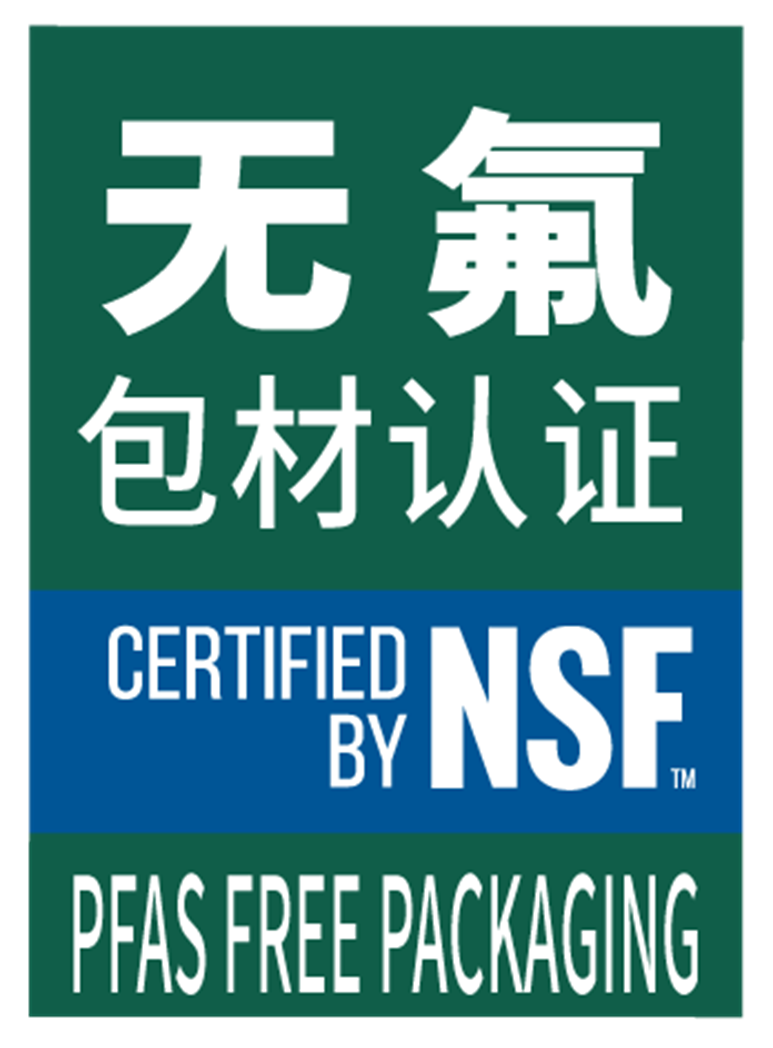
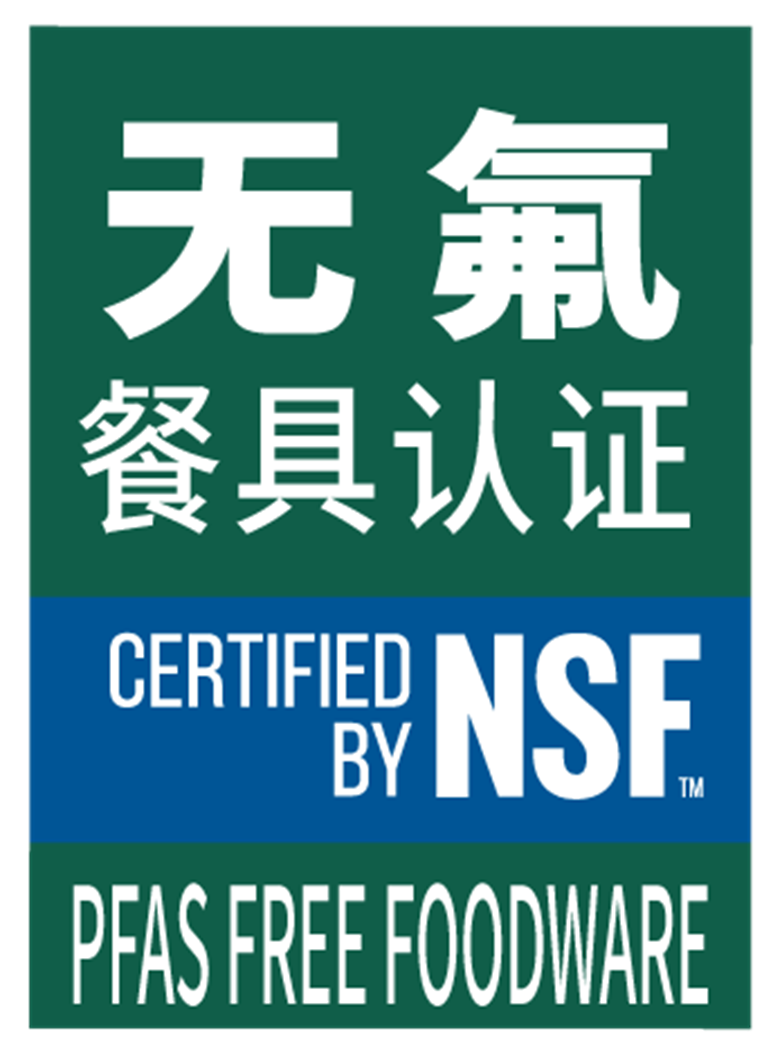
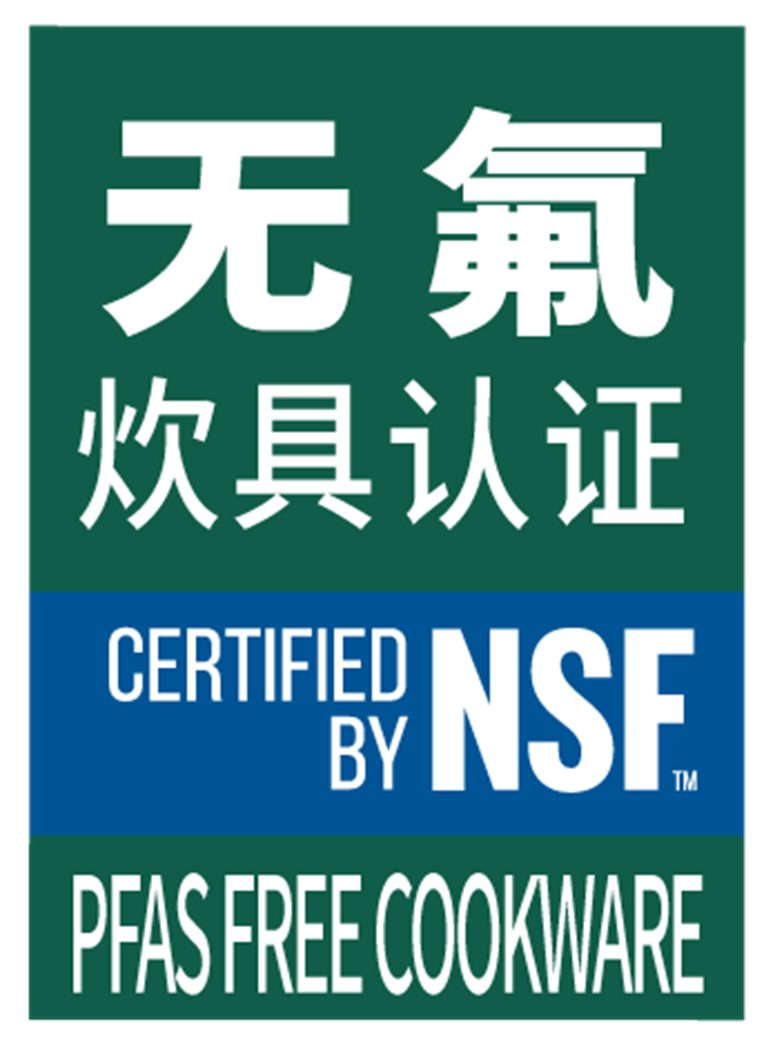
To reduce the damage of "permanent chemicals" - PFAS to the human body and the environment, and fulfill the global demand for a ban on PFAS, NSF launched the PFAS-Free series of certifications for the Chinese food industry, which includes:
- PFAS-Free Packaging Certification
- PFAS-Free Cookware certification
- PFAS-Free Foodware Certification
The purpose of this certification is to ensure that PFAS are not intentionally added to the product and that the fluorine content is below the specified limit, and to block the path of PFAS contamination in the production process, so as to empower the company and endorse the brand.
 |  |  |
*PFAS-free certification is based on the definition in NSF 537 Guideline, PFAS-free products for non-food compounds and food equipment materials.