PDCA – Step by Step Guide to Establishing an Effective QMS from Scratch – Series 1

If your goal for this year is to achieve third-party certification for your organization, we at NSF-ISR want to help you get a high return on investment on this strategic decision. Throughout 2025, we’ll publish four quarterly articles with clear tactics for establishing an effective QMS from scratch. We’ll show you how to apply lean principles and tools to the requirements and intent of Business / Quality Management Systems (B/QMS) based on ISO 9001:2015, such as:
- ISO 14001:2015 (Environmental)
- ISO 45001:2018 (Occupational Health and Safety)
- ISO 27001:2022 (Information Security, Cybersecurity, and Privacy Protection)
- ISO 50001:2018 (Energy Performance)
- AS91XX:2016 (Aviation, Space, and defense) Series
These articles will follow the PDCA approach: PLAN, DO, CHECK, ACT.
In this first article, we’ll focus on PLAN, talking about how to establish the overall project and expected results in four steps.
Step 1 – Define your organization’s strategic focus, strategic focus areas and strategic objectives
Organizations with strategic focus exhibit three elements:
- a clearly defined vision, or the “Why,”
- a mission, or the “What”
- an articulated strategy for achieving them, or the “How.”
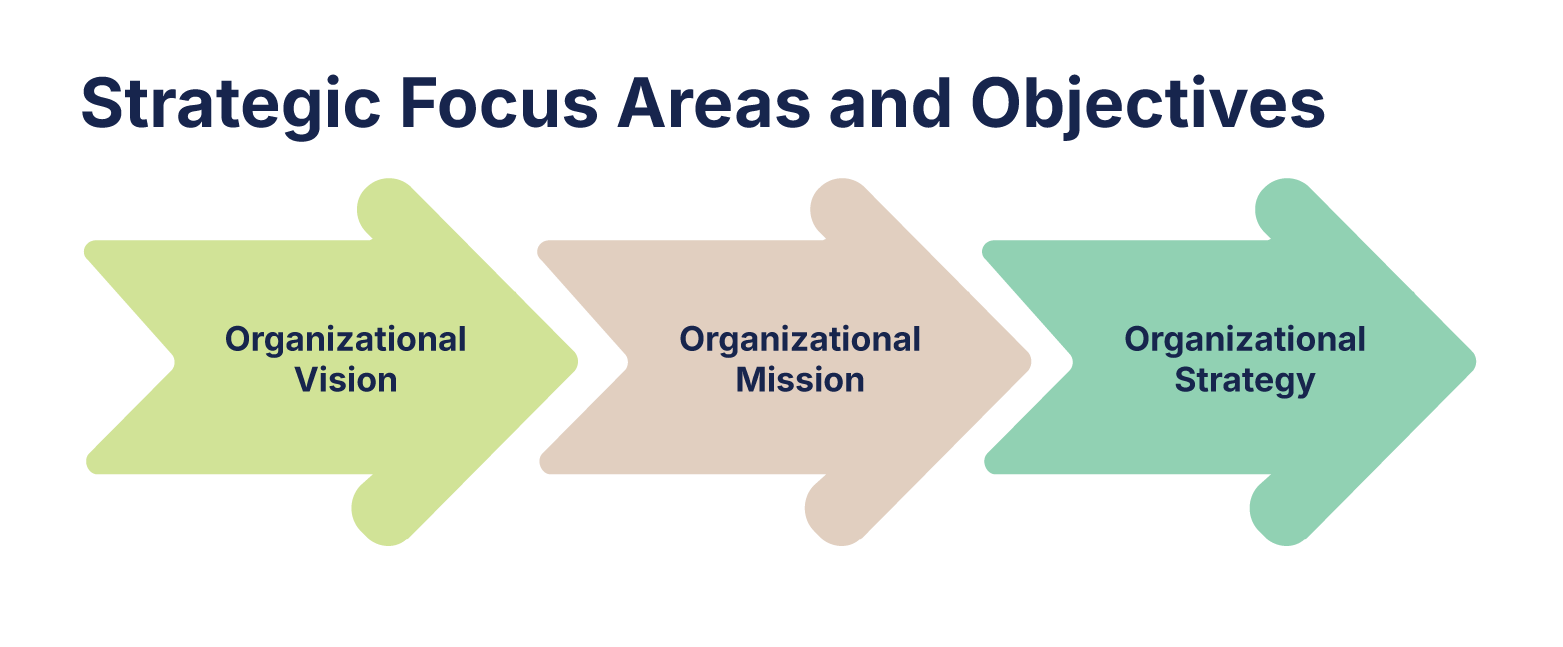
Strategic focus areas are the foundation of an organization’s strategy. They dictate the key initiatives in which the organization invests its time, money and resources to achieve both short and long-term goals. In the context of this article, one of the strategic focus areas for the calendar year is “achieving third-party certification for our organization,” which will then become a strategic objective.
A practical example of this is a precision machine shop of customer-designed parts looking to expand its business by targeting Prime Government Contractors in their area. Here’s how step 1 would play out for them:
- Vision: “To be the Premier Precision Machine Shop for Aviation, Space, and Defense in Colorado.”
- Mission: “We guarantee customer satisfaction by providing precision machined parts 100% on time with zero defects.”
- Strategic focus area: “Improve overall organizational efficiency through AS9100 Certification.”
- Strategic objective: “Secure $1M in revenue through contracts with three local Prime Government Contractors over the next two years.”
Step 2 – Define the scope of certification
The scope of certification should be clearly understood and articulated in simple terms to reflect:
- the actual products and/or processes that the organization can manufacture and perform
- the targeted market(s)
- any relevant internal factors such as values, knowledge and performance.
This scope statement will also be printed on the third-party certificate once the initial certification is achieved. Keeping with the example of the precision machine shop, a simple scope statement could be “Precision machining and finishing of customer designed products for the Aviation, Space, and Defense and Commercial Industries”
Step 3 – Define the organization’s end-to-end processes
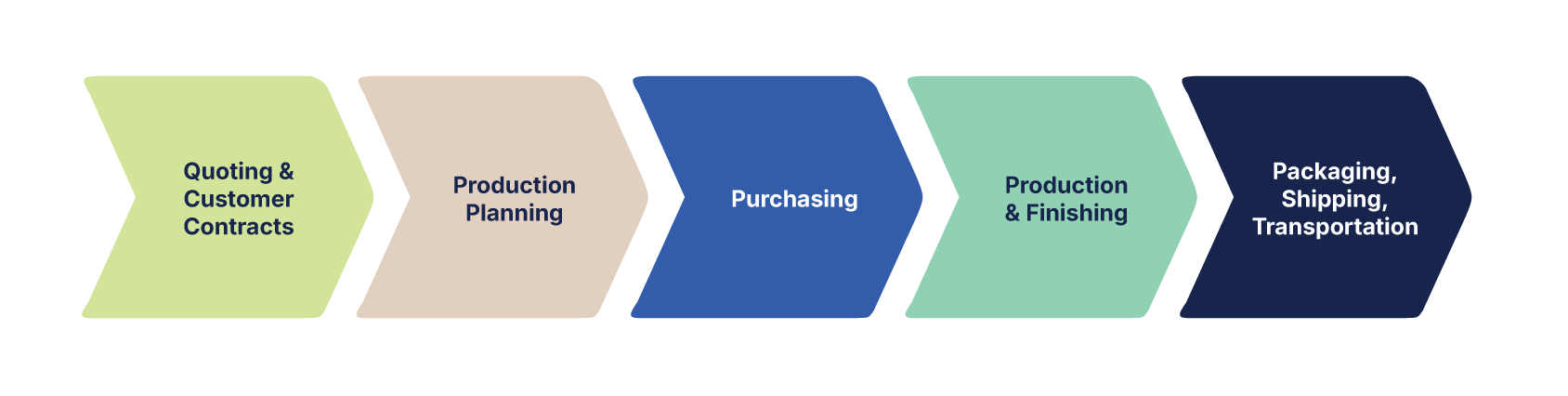
For this step, the organization will map and define the various processes that are required to be in place to deliver products with consistent quality, at cost, and on schedule. This step is important to not only understand the business, but to also have a framework for implementing the relevant requirements of the international standard into the business.
Typical business processes include:
- Sales, quoting, contract review
- Program & project management
- Engineering design & development
- Supplier management, purchasing and receiving
- Production / manufacturing / servicing
- Shipping
- Product maintenance and repair
For the precision machine shop example, the processes are defined as:
Step 4 – Define the project charter and the project plan
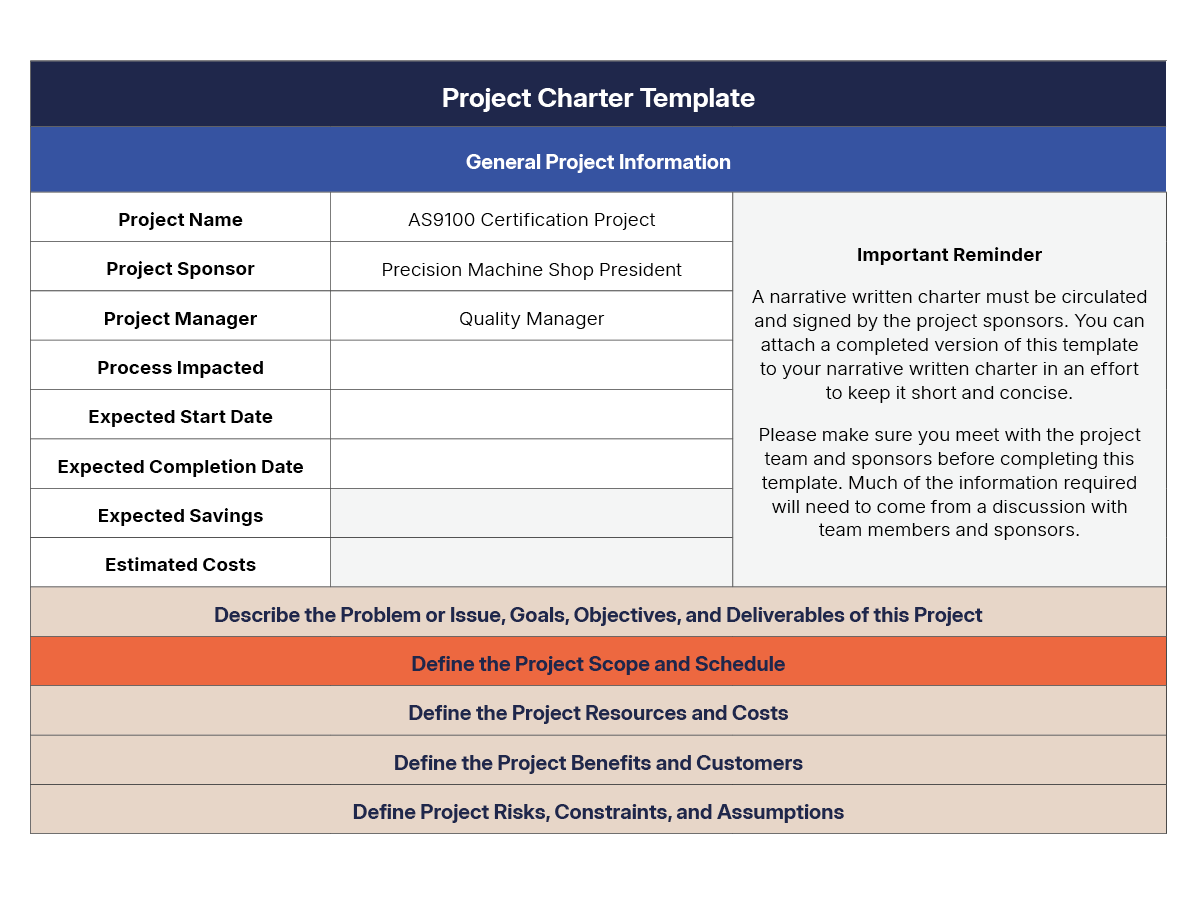
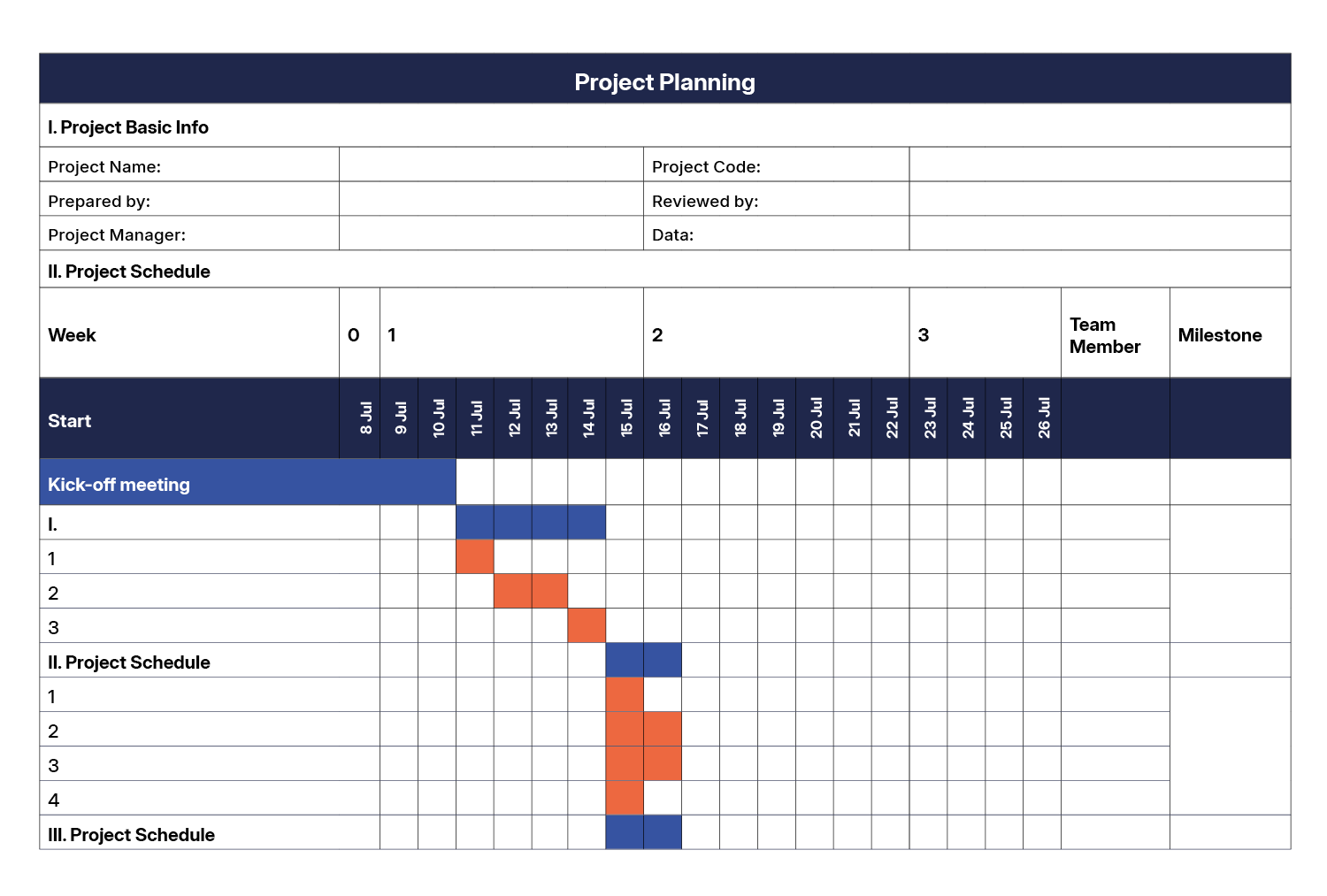
A project charter identifies a member of Top Management as the project sponsor and documents buy-in from key stakeholders for the scope, objectives, and deliverables. A project charter also defines the project team, including roles and responsibilities. If major changes occur, or there are setbacks that affect its scope, objectives, and deliverables, the project charter is updated and re-approved. A project plan provides specific details and guidance for the execution of tasks and activities, and tracking of milestone achievements as well as allocated budget.
Here is an example template of primary headings for a project charter:
Below is an example template for a project plan:
By completing steps 1 to 4, you are now ready to start the “DO” step. This will be detailed in the second article of the series, which will begin with examples of the completed project charter and project plan.
AS9100 Series Aerospace Management Systems Certification

How NSF Can Help You

What’s New with NSF

Information Systems Security Association (ISSA) Welcomes NSF’s Brian Schultz into the 2026 Hall of Fame
September 10, 2026Lifetime achievement recognition honors exceptional leadership and lasting contributions to the cybersecurity profession.
NSF Welcomes Nicole Parent Haughey to Board of Directors
September 10, 2026NSF's appointment of Nicole supports the organization's continued focus on long-term growth and transformation.
NSF Launches Independent Certification Standard for Compact Products
August 25, 2026New third-party certification verifies products cutting materials and shipping impacts while maintaining safety and performance.
NSF Achieves European Accreditation for Drinking Water Product Certification Ahead of 2027 EU Deadline
July 22, 2026The ISO/IEC 17065 accreditation from BELAC complements NSF’s testing capacity, enabling end-to-end support for EU Drinking Water Directive (DWD) readiness ahead of the January 2027 deadline.