Innovation in the Operating Temperatures of Plastic Pipes Requires Updated Testing Methods
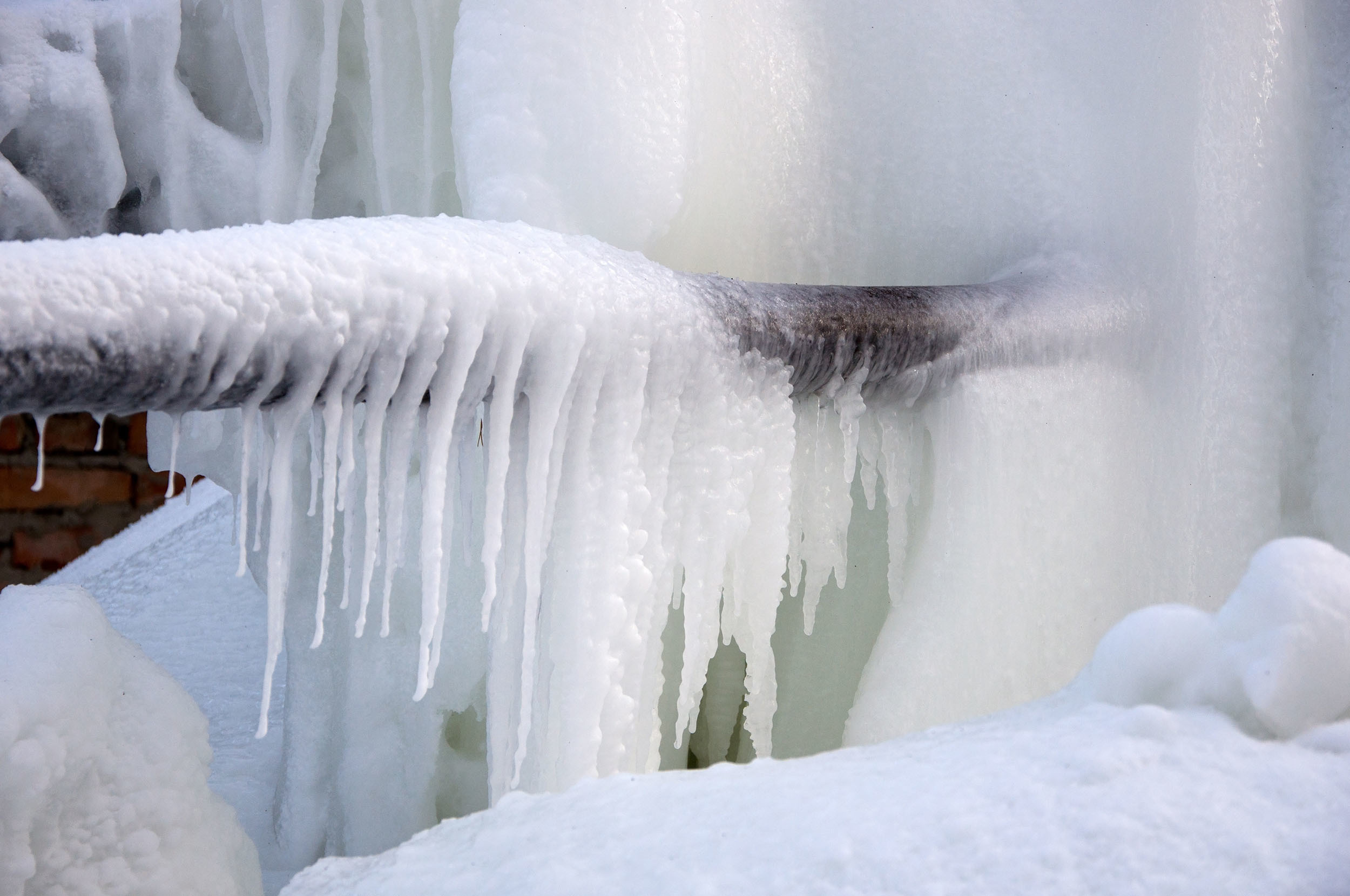
Plastic piping covers a wide range of applications. Many of the standardized tests to determine material properties are created with those applications in mind. As innovation in the industry continues, the boundaries of those tests are pushed and new approaches to testing may need to be developed. One area of innovation is application temperatures: increasing the maximum operating temperature and decreasing the minimum operating temperature. So the temperature range that a test (say, pressure testing) can be conducted under must also expand and the internal and external test fluids must be considered carefully.
Internal Test Environment
In long-term pressure testing, the test environment is defined by the internal and external fluid, which is most commonly water. The use of water as the internal fluid is due primarily to its availability but also its incompressibility. At the pressures under which long-term testing is conducted the water volume does not change significantly. Any release of pressure often results in very little volume change. In contrast, if air were used as the internal fluid, it could be significantly compressed and a release in pressure could result in a rapid increase in volume (also known as an explosion). So, while it’s readily available, using air internally results in a much more hazardous test.
Elevated Temperature Testing
For testing above 203° F, the external environment shifts to air with testing occurring in an oven. This represents increased risk as any failure will release the pressurized water into the oven. Thus, when examining failures in an oven, appropriate safety precautions should be undertaken. Also, if the failure mode releases a significant volume of water that may convert to steam, the pressure within the oven may also rise. NSF has years of experience in testing at these conditions and mitigating any safety concerns.
Cold Temperature Testing
For testing below 32° F, the external environment must also shift to air, and the internal environment must shift from water to a fluid with a lower freezing point. Interestingly, ISO 9080, Plastic piping and ducting systems – Determination of the long-term hydrostatic strength of thermoplastics materials in pipe form by extrapolation states that “the data obtained may be used for predicting the strength down to 20° C below the lowest test temperature.” Since the lowest temperature typically tested is 20° C, this implies that the lowest strength prediction is for 0° C, yet for some applications understanding the strength of the material at lower temperatures becomes important. Using the appropriate set-up, this low temperature strength can be determined.
Key Takeaways
Innovative product designs and applications can result in tests needing to adapt and change to meet more exotic requirements. These requirements may include increasing the testable temperature range or changing the test fluids. Our expertise in these areas can help you obtain the information needed.
Interested in Learning More?
How NSF Can Help You

What’s New with NSF
NSF Launches Protocol 549 for Glyphosate Reduction Claims
October 14, 2026P549 is the first standard globally that validates glyphosate reduction performance of water filtration systems and products.
NSF Welcomes Nicole Parent Haughey to Board of Directors
September 10, 2026NSF's appointment of Nicole supports the organisation's continued focus on long-term growth and transformation.
NSF Launches Independent Certification Standard for Compact Products
August 25, 2026New third-party certification verifies products cutting materials and shipping impacts while maintaining safety and performance.
NSF Achieves European Accreditation for Drinking Water Product Certification Ahead of 2027 EU Deadline
July 22, 2026The ISO/IEC 17065 accreditation from BELAC complements NSF’s testing capacity, enabling end-to-end support for EU Drinking Water Directive (DWD) readiness ahead of the January 2027 deadline.