NSF Food Safety Roadshow 2026: Protecting People, Profit and Brand
Food businesses face growing risks — from internal loss and external crime to complaints and emerging AI threats. At the NSF Food Safety Roadshow 2026, industry experts shared practical steps to help you strengthen controls, reduce risk and protect your brand.
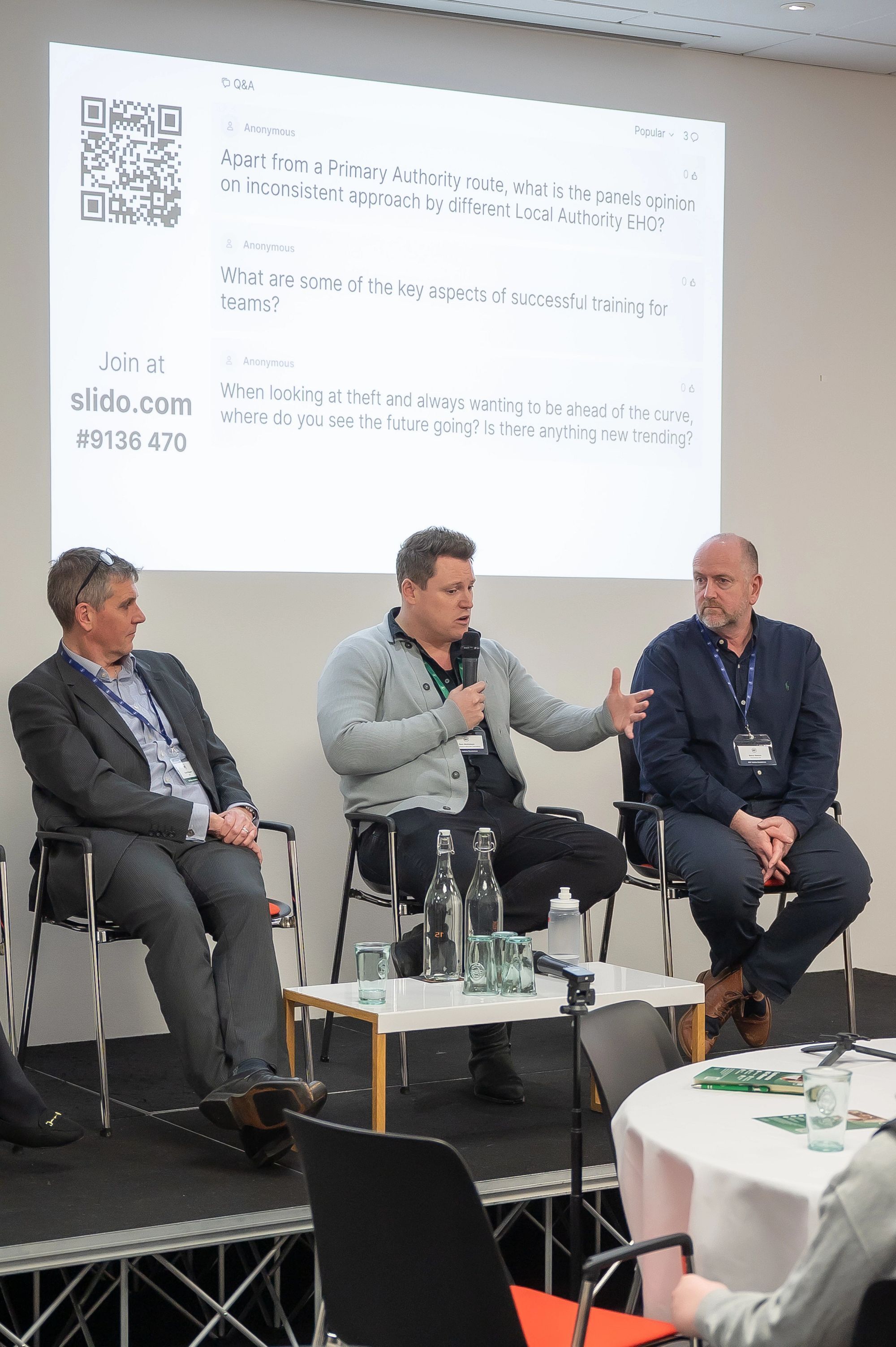
Food safety risks are evolving — are your controls keeping up?
Food businesses today face increasing operational, financial and reputational risks. From internal loss and external crime to evolving regulatory expectations and customer complaints, the risk landscape continues to grow in complexity.
At the NSF Food Safety Roadshow 2026 in London, industry experts shared practical insights and real-world examples to help businesses strengthen controls, protect teams and safeguard brand reputation.
Mitigating loss from within
Internal loss remains one of the most underestimated risks in food and retail businesses. As highlighted by Steve Nelson, hidden losses can quietly erode margins — and addressing an issue once does not mean it is resolved permanently.
“Don’t assume if it’s fixed once that you fixed it permanently.”
Cash risks are evolving
While many businesses are reducing cash use, losses are shifting into new areas rather than disappearing.
Key risks include:
- Cash reconciliation not being reviewed or investigated
- IOUs still taking place in cash-based environments
- Cash collections taking longer
- Forged £50 notes entering circulation
Strong cash controls remain essential and must be actively monitored and challenged.
Stock control: understanding loss, not just inventory
Weekly stock takes confirm what is on hand but do not always explain why stock is missing.
Common loss routes include:
- Stock being hidden in rubbish
- Items disappearing after delivery
- Losses written off as customer retention gestures
- Misuse of discounts and promotional codes
Discount programs should be properly measured and assessed, rather than assumed to be low risk.
Walkouts and AI-driven reporting
Walkouts are increasing, requiring businesses to design environments that make theft more difficult.
At the same time, AI is transforming loss reporting by enabling a shift from reactive reviews to more proactive, real-time insight. However, data only creates value when:
- Someone is accountable for reviewing it
- Insights lead to clear action
Emerging labour risks
With reduced staffing and pressure on training budgets, responsibilities such as refunds and voids are often delegated to less experienced employees — increasing the risk of loss if controls are not maintained.
Strong systems depend on well-trained teams, supported by clear processes and active use of data.
Managing external crime and supporting frontline teams
External crime continues to increase across the UK, with organised retail crime becoming more sophisticated and more confrontational.
With UK retail losses exceeding £2.2 billion, effective prevention strategies are more important than ever.
“The environment, behaviour and partnerships all have their part to play.”
Three pillars of crime prevention
Environment
- Effective CCTV coverage
- Controlled entry points
- Risk assessments for new sites
Behaviour
- Regular floor walks
- Early engagement with customers
- Clear escalation processes
- Consistent reporting and information sharing
Partnerships
- Engagement with local police
- Collaboration with councils and BID teams
- Intelligence sharing with neighbouring businesses
When these elements are aligned, teams are better supported and more confident in handling incidents.
Preparing for Martyn’s Law
The Terrorism (Protection of Premises) Act 2025 introduces new responsibilities for certain venues, with implementation expected in 2027.
- Standard tier: 200–799 capacity
- Enhanced tier: 800+ capacity
One-off events exceeding 200 people may also fall within scope.
“Preparedness builds confidence in your teams, before, during and after.”
Preparing effectively
Recommended early actions include:
- Reviewing emergency response plans
- Clarifying evacuation and lockdown procedures
- Delivering basic hostile threat awareness training
- Assigning a responsible senior lead
- Testing communication and escalation processes
Preparation reduces uncertainty, strengthens leadership and improves response under pressure.
Using complaints data to protect your brand
As outlined by Xenia Jacques (NSF Senior Consultant), complaints are no longer just a customer service issue — they are a critical component of risk management and due diligence.
“A happy customer tells a friend. An unhappy customer tells the world.”
Complaints in the digital age
Complaints now spread rapidly through:
- Online reviews
- Social media
- Media coverage
Poor handling can lead to regulatory scrutiny, enforcement action and reputational damage.
Emerging challenge: AI-generated complaints
AI-generated images and fabricated claims are increasing, requiring businesses to demonstrate:
- Robust processes
- Clear documentation
- Evidence of preventative controls
Due diligence in action
A real case highlighted the impact of poor complaint management:
- 29 reported illnesses
- Confirmed Salmonella outbreak
- £40,000 in fines
- National media coverage
Early complaints were dismissed, allowing the issue to escalate.
What regulators expect
Environmental Health Officers will review:
- Historical records (not just the incident day)
- Staff training and understanding
- Previous unresolved issues
- CCTV, samples and documentation
“Due diligence is your strongest defence.”
Using data effectively
Valuable sources include:
- Second- and third-party audits
- Regulatory insight
- Customer feedback
- Media monitoring
Audits should be used as an early warning system to identify risks before they escalate.
Strengthen your food safety and risk controls
Talk to our experts about reducing loss, improving compliance and protecting your brand.
What’s New with NSF

NSF Launches Protocol 549 for Glyphosate Reduction Claims
October 14, 2026P549 is the first standard globally that validates glyphosate reduction performance of water filtration systems and products.
NSF Welcomes Nicole Parent Haughey to Board of Directors
September 10, 2026NSF's appointment of Nicole supports the organisation's continued focus on long-term growth and transformation.
NSF Launches Independent Certification Standard for Compact Products
August 25, 2026New third-party certification verifies products cutting materials and shipping impacts while maintaining safety and performance.
NSF Achieves European Accreditation for Drinking Water Product Certification Ahead of 2027 EU Deadline
July 22, 2026The ISO/IEC 17065 accreditation from BELAC complements NSF’s testing capacity, enabling end-to-end support for EU Drinking Water Directive (DWD) readiness ahead of the January 2027 deadline.