FDA Inspection Readiness: What Inspectors Look for Beyond SOPs, FDA 483 Responses and Quality Culture
Is your quality system ready for regulatory scrutiny? Former FDA investigator Dr. Julia Marré shares practical guidance on quality culture, site preparation and effective Form FDA 483 responses.
FDA inspections test far more than whether a company has the correct procedures in place.
Investigators want to understand whether a pharmaceutical quality system works in practice. They look at whether risks are identified, concerns are escalated, records tell a consistent story and leaders provide the oversight and resources needed to protect patients.
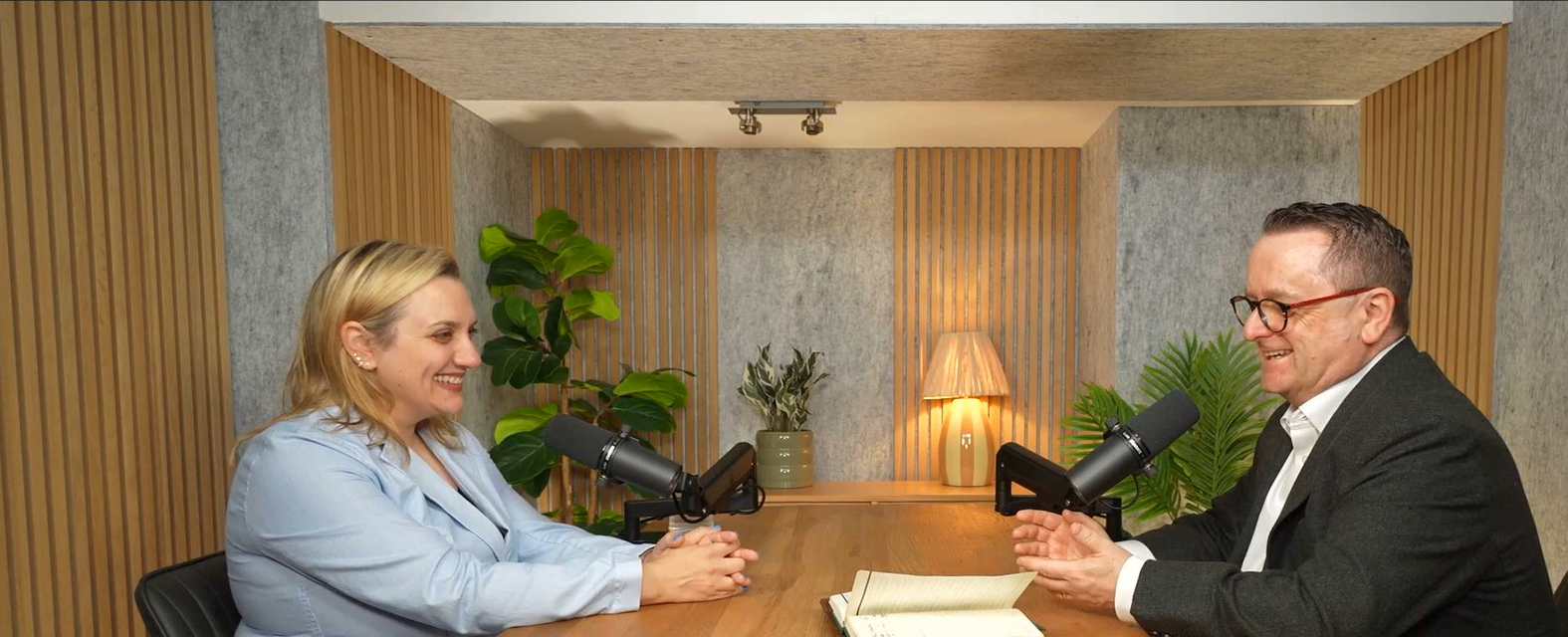
In this episode of NSF’s Compliance Unlocked podcast, former FDA investigator and NSF pharmaceutical quality expert Dr. Julia Marré discusses what modern inspection readiness looks like.
Drawing on her regulatory and industry experience, Dr. Marré explains how pharmaceutical and biotech organisations can prepare before an inspection, support employees while investigators are on-site and respond effectively when observations are raised.
FDA investigators want to know whether the quality system works
A site can have an extensive library of standard operating procedures and still be poorly prepared for an FDA inspection.
According to Dr. Marré, the regulatory focus has shifted. Investigators are not only asking whether the required procedures exist. They want evidence that the quality system identifies the most significant risks in the facility and that the organisation responds appropriately when those risks become apparent.
This distinction is critical.
A documented process has limited value if employees do not follow it consistently, if recurring issues are not investigated effectively or if corrective and preventive actions fail to stop problems from returning.
For quality leaders, inspection readiness should therefore begin with a candid assessment of system effectiveness, rather than a last-minute check that the necessary documents are available.
Organisations should be able to demonstrate:
- How quality risks are identified and prioritized.
- How issues are escalated.
- How investigations reach evidence-based root causes.
- How corrective and preventive actions are selected and implemented.
- How CAPA effectiveness is verified.
- How product and patient risk are assessed.
- How significant trends are communicated to management.
The key question is not simply, “Do we have the procedure?”
It is, “Can we demonstrate that the procedure is working?”
Evolution of FDA inspection focus toward risk-based quality systems
It’s less about whether you have an SOP and more about whether that SOP is functioning to identify risk to patients.
Quality culture becomes visible during an inspection
Quality culture can sound intangible, but investigators encounter evidence of it throughout an inspection.
They can see whether employees feel comfortable escalating concerns, whether quality teams take those concerns seriously and whether investigations lead to meaningful preventive action.
They may also identify patterns in documentation that suggest a company is repeatedly assigning the same root cause without resolving the underlying issue.
The expectation is not that a site will never experience a mistake, deviation or unexpected event. The more important questions are:
- Was the issue recognised?
- Was it escalated promptly?
- Was it documented appropriately?
- Was its potential risk assessed?
- Was the underlying cause investigated?
- Did the organisation take action to prevent recurrence?
If the same root cause appears repeatedly, an investigator may question whether the investigations are sufficiently thorough or whether the resulting actions are effective.
An effective quality system gives investigators confidence that the organisation can recognise and control risk even when a regulator is not present.
FDA expectations for quality culture and issue escalation
If the same root cause appears every time, an investigator may question whether you are really investigating.
Inspection readiness should be part of normal operations
For routine surveillance inspections, readiness cannot depend on receiving advance notice.
Inspection readiness should be embedded in everyday operations, while recognising that preparation may need to become more intensive ahead of a known regulatory milestone.
For companies approaching a pre-approval inspection connected with a New Drug Application or Biologics License Application, Dr. Marré recommends starting the preparation process well in advance.
A comprehensive mock inspection conducted approximately three to six months before the anticipated inspection can give the organisation time to identify weaknesses, complete remediation and verify that corrective actions are effective.
Organisations operating across multiple jurisdictions may also benefit from involving experts with experience of different regulatory authorities. Although the underlying Good Manufacturing Practice principles may be similar, the style, conduct and emphasis of inspections can vary.
A credible mock inspection should test much more than technical compliance. It should give the organisation an opportunity to practise:
- Hosting investigators.
- Managing questions in the front room.
- Receiving and tracking document requests.
- Retrieving and reviewing records in the back room.
- Preparing operators and laboratory analysts for interviews.
- Escorting investigators through operational areas.
- Recording questions, commitments and follow-up items.
- Escalating newly identified issues into the quality system.
The purpose is not to teach people to deliver scripted answers. It is to help them explain their responsibilities accurately and confidently under regulatory scrutiny.
Has your organisation tested how the front room, back room, quality team, operators and laboratory personnel work together under inspection conditions?
The front room and back room must work as one system
During an inspection, the front room is the primary point of interaction with investigators. The back room supports that interaction by locating, reviewing and transferring requested documentation.
Both functions are essential.
A document supplied in error can create confusion, undermine confidence or lead an investigator into an area unrelated to the original request. A delayed response can suggest that records are difficult to retrieve or that the site is not in control of its information.
An effective back room helps ensure that the correct record is located, reviewed and transferred through a controlled process.
Before an inspection, the organisation should define:
- Who will lead front-room interactions.
- Who is authorised to answer specific types of questions.
- How document requests will move from the front room to the back room.
- Who will locate and review requested documents.
- How document versions, attachments and supporting records will be checked.
- How requests, responses and commitments will be logged.
- How urgent questions will be escalated.
- How newly identified concerns will enter the quality system.
The objective is not to restrict legitimate access to information or create an artificial presentation of the site. It is to give investigators clear, accurate and timely responses.
You need your front room, back room, operators and QC analysts to be ready. Without practice, the inspection can feel very high stakes.
What should you do if you do not know the answer?
An inspection interview can feel high stakes, particularly for an employee who has not experienced one before.
Dr. Marré is clear that not knowing an answer is acceptable. Inventing an answer is not.
An employee can acknowledge the question, explain that they need to verify the relevant information and commit to returning with an accurate answer.
The response should be concise, transparent and followed through.
A suitable response might be:
“Thank you for the question. I need to verify that information, and I will come back to you with an accurate answer.”
The same principle applies when an investigator identifies a genuine gap.
The organisation should assess and document the issue rather than trying to explain it away. If appropriate, it should open a deviation or other quality event and begin addressing the concern promptly.
That response can itself give the investigator useful evidence about the site’s quality culture.
When an investigator returns to an issue the following day, a documented and proportionate response demonstrates that the organisation takes concerns seriously and knows how to bring them into its quality system.
You don’t want to make something up if you don’t know. Be transparent and say, ‘I will find an answer for you.
Investigators want to see normal operations, not a performance
Preparation should help employees explain and perform their work accurately. It should not teach them to deliver rehearsed answers.
Investigators may spend extended periods observing an operation and speaking with the people who perform the work.
They want to understand what happens under normal conditions. They are looking for evidence that suitable behaviors and risk controls have become part of the organisation’s operational muscle memory.
This is why inspection readiness cannot be confined to quality leadership.
Operators, analysts, supervisors and site leaders must understand their responsibilities, the procedures governing their work and how their actions contribute to product quality and patient protection.
Don’t put a show on for me. I want to see whether there is muscle memory for how to act appropriately and manage risk.
A Form FDA 483 requires a risk-based response
A Form FDA 483 may be issued at the conclusion of an inspection when investigators have observed conditions that, in their judgment, may constitute violations of applicable regulatory requirements.
It is important to understand that a Form FDA 483 is not a final agency determination. However, the observations, evidence collected during the inspection and the company’s subsequent response can influence FDA’s assessment and the eventual inspection classification.
Organisations have a limited period in which to submit a written response for FDA’s timely consideration. That makes it essential to begin the response process quickly and manage it through a disciplined, cross-functional team.
One of the most important elements of a pharmaceutical Form FDA 483 response is a clear assessment of patient risk.
Dr. Marré cautions that a response can describe the event, investigation and CAPAs in considerable detail but remain weak if it does not explain whether and how the observation could affect patients.
The organisation should connect its evidence, conclusions and proposed actions to:
- Product quality.
- Patient safety.
- Potentially affected products and batches.
- Relevant processes and time periods.
- The effectiveness of existing controls.
- The need for additional corrective or preventive measures.
A strong response should make it easy for the reviewer to understand:
- What happened.
- What products, processes, systems or periods may be affected.
- What immediate corrections were taken.
- How the organisation contained the issue.
- What the investigation found.
- What the organisation determined to be the root cause.
- What corrective and preventive actions are planned.
- What the risk to products and patients is.
- What evidence supports that assessment.
- Who owns each outstanding action.
- When each action will be completed.
- How the organisation will verify the effectiveness of the remediation.
The response should be evidence-based, concise and sufficiently detailed. It should neither minimize the observation nor make commitments that the organisation cannot realistically fulfil.
If you haven’t assessed the risk to patients associated with the observation, that is a significant weakness in your response.
Organisations can clarify an observation respectfully
A company may sometimes disagree with part of an observation or believe that the investigator did not have access to all the relevant information.
In that situation, the company’s response can acknowledge the observation and explain its position respectfully, using clear records and supporting evidence.
The response may:
- Clarify what the investigator observed.
- Identify relevant information that was unavailable during the inspection.
- Explain how that information affects the company’s assessment.
- Provide records supporting the company’s interpretation.
- Describe any actions taken despite the disagreement.
- Explain how product and patient risk were evaluated.
Disagreement does not remove the need to investigate.
The organisation must still demonstrate that it has taken the observation seriously, assessed its implications and considered whether corrective action is required.
A defensive response is unlikely to build confidence. A factual, respectful and evidence-led response is more effective.
Inspection outcomes can have significant business consequences
The implications of an FDA inspection depend on the nature of the inspection, the observations made, the products involved and the organisation’s response.
Inspection outcomes can affect more than the quality department. Depending on the circumstances, unresolved compliance concerns can have consequences for:
- Regulatory applications.
- Product approvals.
- Manufacturing operations.
- Product distribution.
- Imports into the United States.
- Supply continuity.
- Customer and partner confidence.
- Remediation costs.
- Leadership time and resources.
- Patient access to medicines.
This makes inspection readiness a business continuity and patient-access issue, as well as a quality and regulatory priority.
Organisations should avoid treating readiness as a temporary quality project. Its significance should be understood across manufacturing, supply chain, regulatory affairs and executive leadership.
Executive leadership is ultimately accountable
FDA scrutiny does not stop at the quality department.
Executive management is expected to understand the significant quality issues at a site and provide the resources required to address them.
Leaders should receive meaningful information about quality trends and risks, participate in an established management-review process and understand where additional people, investment or technical support may be required.
Appropriate executive involvement includes:
- Understanding the site’s most significant quality risks.
- Reviewing recurring deviations and adverse trends.
- Challenging whether investigations reach credible root causes.
- Confirming that CAPAs are appropriately designed and resourced.
- Supporting independent inspection-readiness assessments.
- Participating in inspection governance.
- Ensuring response commitments are realistic.
- Monitoring remediation through completion.
- Confirming that CAPA effectiveness is verified.
Quality may be managed by a dedicated function, but site compliance depends on active leadership across the organisation.
In the end, executive leadership has the final responsibility for site compliance.
Good preparation begins with an honest view of risk
Dr. Marré summarizes good inspection preparation as knowing the risks inherent in the site, process and product profile rather than ignoring those risks or hoping an investigator will not find them.
A well-prepared organisation can explain:
- What its most important risks are.
- Why those risks are significant.
- How they are controlled.
- What evidence demonstrates that the controls are effective.
- How employees are trained to manage them.
- How issues are escalated.
- How leadership receives assurance that the quality system is working.
Good preparation does not mean presenting a site as free from risk.
It means showing that the organisation understands its risks, manages them transparently and responds appropriately when weaknesses emerge.
The weakest strategy is to assume that the inspection will probably be fine.
Good preparation is knowing what your site’s risks are, rather than ignoring them or hoping that someone doesn’t find them. A bad way to prepare is, ‘Well, it’ll probably be fine.’
How NSF can help
Inspection readiness requires technical knowledge, operational discipline and an objective understanding of where risk exists.
NSF supports pharmaceutical and biotech organisations before, during and after regulatory inspections through independent assessment, experienced regulatory insight and practical remediation support.
Our experts can help organisations:
- Conduct independent mock inspections.
- Assess pharmaceutical quality-system effectiveness.
- Identify inspection-readiness gaps.
- Prepare front-room and back-room teams.
- Coach personnel for inspection interviews.
- Evaluate document-request processes.
- Review Form FDA 483 responses.
- Assess product and patient risk.
- Develop corrective and preventive action plans.
- Support regulatory remediation programmes.
- Strengthen management oversight.
- Build a more effective and sustainable quality culture.
Whether an organisation is preparing for a regulatory milestone, strengthening routine readiness or responding to inspectional observations, an independent assessment can help leadership distinguish between apparent readiness and evidence-based confidence.
How confident are you in your inspection readiness?
Frequently asked questions
What is FDA inspection readiness?
FDA inspection readiness is an organisation’s ability to demonstrate that its operations and quality systems comply with applicable requirements and work effectively in practice. It includes documentation, employee knowledge, operational behavior, risk management, governance and the ability to respond accurately to investigator requests.
Who should be involved in FDA inspection preparation?
Preparation should include quality assurance, quality control, regulatory affairs, manufacturing, engineering, document control, site leadership and relevant subject-matter experts. Executive leaders should understand significant risks and ensure the organisation has sufficient resources to address them.
What is the difference between the inspection front room and back room?
The front room is where the organisation interacts directly with investigators. The back room receives requests from the front room, locates and reviews records and helps ensure that the correct information is supplied through a controlled process.
What should an employee do if they do not know the answer to an FDA investigator’s question?
The employee should not guess. They should explain concisely that they need to verify the information and will return with an accurate answer. The inspection team should then track the commitment and ensure that it is completed.
What should be included in a Form FDA 483 response?
A response should address each observation clearly and include immediate corrections, investigation findings, root cause, CAPAs, patient and product risk, supporting evidence, owners, completion dates and plans for verifying effectiveness.
How can a mock FDA inspection help?
A mock inspection can identify gaps before a regulatory inspection and test how effectively the front room, back room, operational teams and leadership work together. It also gives employees experience answering questions and retrieving records under realistic inspection conditions.
How far in advance should an organisation prepare for an FDA inspection?
Routine inspection readiness should be maintained as part of normal operations. Ahead of a known regulatory milestone, organisations should begin a more intensive readiness programme far enough in advance to identify gaps, complete meaningful remediation and verify that the resulting actions are effective.
Watch the full podcast episode
How NSF Can Help You

What’s New with NSF
NSF Launches Protocol 549 for Glyphosate Reduction Claims
October 14, 2026P549 is the first standard globally that validates glyphosate reduction performance of water filtration systems and products.
NSF Welcomes Nicole Parent Haughey to Board of Directors
September 10, 2026NSF's appointment of Nicole supports the organisation's continued focus on long-term growth and transformation.
NSF Launches Independent Certification Standard for Compact Products
August 25, 2026New third-party certification verifies products cutting materials and shipping impacts while maintaining safety and performance.
NSF Achieves European Accreditation for Drinking Water Product Certification Ahead of 2027 EU Deadline
July 22, 2026The ISO/IEC 17065 accreditation from BELAC complements NSF’s testing capacity, enabling end-to-end support for EU Drinking Water Directive (DWD) readiness ahead of the January 2027 deadline.