On-Site Chemical Generation: Closing the Effluent Compliance Gap
This whitepaper explores how the growing use of on‑site chemical generation in water treatment revealed a gap in verifying the safety of chemicals produced at the point of use—and how a standardised effluent testing approach developed last year now enables clear, consistent compliance.
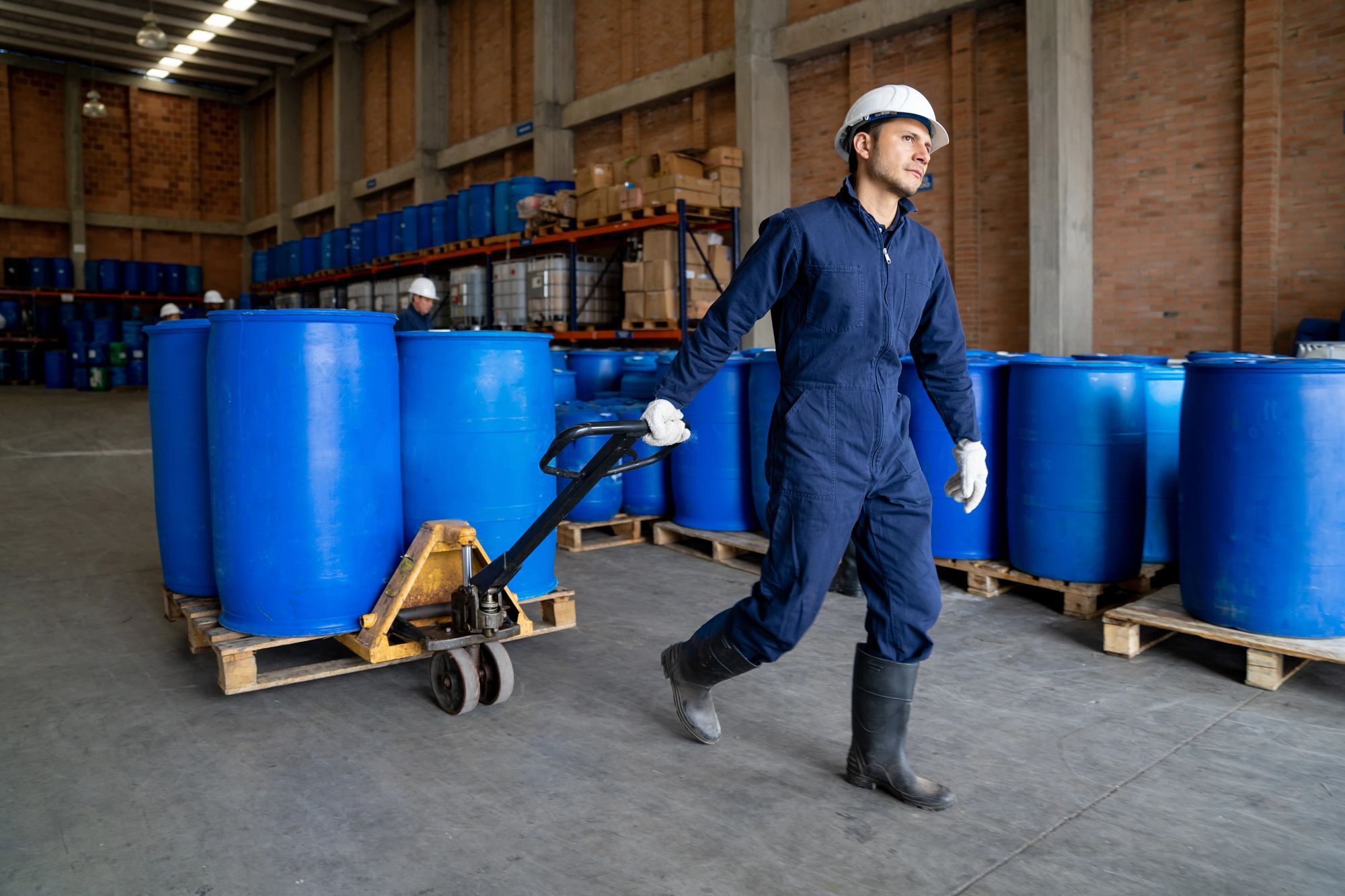
Introduction
The shift toward on-site chemical generation (OSG) in water treatment has been building steadily. Across the industry, water utilities report that OSG is increasingly seen as a practical and cost-effective alternative to bulk delivery for certain water treatment chemicals. The drivers behind this trend are supply chain disruptions, tightening sustainability requirements, and advances in smart manufacturing technology.
For utilities considering (or already operating) OSG systems, this raises the question: how is it verified that the chemical, which the generator produces, is safe for the treatment of drinking water? In general, this compliance decision has rested with individual regulatory bodies, water utility bid specifications, and permit processes. Until recently, compliance assessment for the safety of effluent (produced at end user sites) had been difficult to provide, as a standardised method for this type of safety evaluation had not yet been established.
However, in late 2025, a new tool for effluent compliance assessment became available with the addition of Section 8.6.4 to NSF/ANSI/CAN 61. This whitepaper explains the scope and significance of 8.6.4, and information that water treatment professionals need to know about the use of it for safety assessments of OSG water treatment chemicals.
OSG in water treatment: benefits and applications
Benefits of OSG
The industry generally reports three significant drivers for the use of on-site chemical generation in lieu of bulk chemical delivery:
- Safety and cost: Producing chemicals on-site can reduce the risks and costs of transporting, handling, and storing hazardous substances, and avoids the degradation of bulk sodium hypochlorite during shipping and storage.
- Supply chain resilience: Localised just-in-time production can reduce dependence on global shipping networks and ensure that supply is matched to actual site demand.
- Sustainability: On-site generation can reduce carbon footprint by cutting truck shipments and specialised waste management, supporting ESG commitments that are increasingly central to utility operations.
In addition, the rise of smart manufacturing and artificial intelligence is making OSG more viable for many complex, continuous operations — lowering the technical barriers that had once limited adoption of OSG systems.
How OSG is used in water treatment
OSG is most commonly used in water disinfection, where utility operators can produce low-strength oxidants on-site in lieu of using bulk liquid chlorine or concentrated sodium hypochlorite bleach. The main technologies used for this application are:
- On-site hypochlorite generators (also known as electrolytic chlorinators): electrolyse a brine solution to produce a low-concentration sodium hypochlorite solution on demand.
- Mixed oxidant systems: produce a blend of oxidants (including hypochlorous acid) for the reduction of biofilms and disinfectant byproducts (DBPs).
- Chlorine dioxide generators: produce chlorine dioxide solution from a precursor feedstock such as sodium chlorite or sodium chlorate.
- Ozone generators: use corona discharge to convert oxygen into ozone for water disinfection.
Standards for evaluating OSG technology
In the US, Canada, and several other countries, drinking water regulations require that on-site generation systems used in public water supplies comply with NSF/ANSI/CAN 60 and NSF/ANSI/CAN 61.
NSF/ANSI/CAN 60
Certification to NSF/ANSI/CAN 60 verifies that the feedstock and precursor chemicals used in OSG systems do not introduce harmful levels of contaminants into drinking water at their specified dosage in the operation of the generator.
Common examples of feedstock/precursor chemicals under the scope of this standard are:
- Liquid oxygen: tested for volatile organic compounds; used in OSG ozone production.
- Sodium chlorite: tested/evaluated for regulated metals and volatile organic compounds; used in OSG chlorine dioxide production.
- Sodium chlorate: tested/evaluated for regulated metals, volatile organic compounds, and perchlorate; used in OSG chlorine dioxide production.
- Sodium chloride salt: tested/evaluated for regulated metals, radionuclides (gross alpha/beta content), and bromide; used in OSG sodium hypochlorite production.
NSF/ANSI/CAN 61
Certification to NSF/ANSI/CAN 61 verifies that OSG equipment in contact with drinking water (and drinking water treatment chemicals) does not leach harmful contaminants above established limits into the water system. Products are tested under realistic conditions—surface area, temperature, and pH—to verify they are safe for drinking water usage.
The compliance gap
Although health effects compliance for OSG systems used in drinking water utilities has been primarily addressed by NSF/ANSI/CAN 60 (for feedstock chemicals) and NSF/ANSI/CAN Standard 61 (for chemical generators), these standards have not historically provided a standardised means of evaluating the chemical effluents generated by OSG systems at the point of use.
Although chemicals generated on-site fall within the scope of NSF/ANSI/CAN 60 (example: sodium hypochlorite), Standard 60 was developed for the evaluation of chemical products manufactured under controlled conditions. Chemicals generated on-site, however, are subject to different variables. For example:
- Alternative feedstock chemicals: For example, switching to a different grade of salt, or using a feedstock from a different source or supplier may alter the contaminant profile.
- Source water chemistry: For example, bromide levels in source water can differ dramatically by geography and interact with the Electrochlorination process to form bromate independently of the salt feedstock.
- Operating parameters: electrode wear, temperature fluctuation, and brine concentration can all affect the chemical profile of the effluent over time.
- Equipment condition over time: OSG systems require routine maintenance and eventual replacement of components that may degrade, altering the effluent profile.
As a consequence of this gap, compliance assessment for the safety of effluent generated on-site has historically been difficult to provide. In general, this compliance decision has rested with individual public health authorities and water utilities.
A standardised solution
In response, the Joint Committee that oversees NSF/ANSI/CAN 61 (comprised of water utility operators, drinking water regulatory officials, OSG equipment manufacturers, and feedstock chemical producers) formed a dedicated Chemical Generator Effluent Task Group to develop a new evaluation method for OSG effluent chemicals. The result was this new section of NSF/ANSI/CAN 61, published in late 2025: Section 8.6.4 — Chemicals Produced by Chemical Generators.
This section allows generator manufacturers to demonstrate that treatment chemicals produced by their equipment meet NSF/ANSI/CAN 60 requirements. Testing is conducted under laboratory conditions—rather than at a specific utility site—and is a supplement to the extraction analysis (of the generators) already required under Section 8.6 of NSF/ANSI/CAN 61. Testing follows NSF/ANSI/CAN 60 criteria for the preparation and analysis of test samples.
While 8.6.4 compliance is not required to obtain NSF/ANSI/CAN 61 certification, a growing number of permit applications for OSG installations are beginning to require third-party testing and evaluation of the treatment chemical effluent specifically.
The key differences between Standard 60 and 8.6.4 are summarised below.
| Standard 60 | Standard 61 / 8.6.4 | |
| What is being tested/evaluated | A treatment chemical, as produced by a chemical manufacturer | A generator's output — the chemical that the machine produces |
| Who is certified | The chemical producer | The equipment manufacturer |
| Where the sample comes from | A bulk chemical shipment off a production line, container, or bulk shipping vessel | The generator itself, running under documented operating specifications |
| Production conditions | Controlled factory environment, consistent feedstock | Lab-simulated generator operation with certified inputs |
| The question it answers | Is this chemical safe for use in drinking water treatment? | Does this machine produce a safe chemical (for drinking water treatment) when operated correctly? |
How 8.6.4 works: the evaluation details
Since NSF/ANSI/CAN 60 parameters are used as the evaluation benchmark, only chemicals covered under the scope of that standard are eligible for evaluation under 8.6.4.
To comply with this section of NSF/ANSI/CAN 61, the chemical produced by the generator must meet all NSF/ANSI/CAN 60 requirements. This includes:
- Compliance at the product's maximum use level.
- Sample preparation following NSF-60/Annex N-1 protocol.
- Testing for all required analytes (specified in NSF/ANSI/CAN 60 for the respective chemical).
- Sample collection from the generator while operating within its documented specifications.
Examples of NSF/ANSI/CAN 60 testing requirements for OSG-produced chemicals:
- Sodium hypochlorite: tested for regulated metals, volatile organic compounds, and three oxyhalides (bromate, perchlorate, and chlorate).
- Chlorine dioxide: tested for regulated metals and volatile organic compounds.
The 8.6.4 compliance label
For utilities purchasing OSG equipment, the 8.6.4 compliance label is the most visible and practical credential to look for. It appears directly on the generator equipment, installation manual, or operating manual and is a verifiable statement that procurement teams and regulators can recognise and rely on.
If the produced chemical meets Standard 60 requirements (as tested by an accredited certification body), a manufacturer (of a Standard 61 certified chemical generator) can apply the following label:
"[Produced chemical name] is compliant to NSF/ANSI/CAN 60 at or below [X] mg/L using the following feedstock chemicals [list feedstocks, % strengths]. All feedstock chemicals shall be NSF/ANSI/CAN 60 certified and adhere to their certified maximum use level(s). Influent water to the chemical generator shall meet operations manual specifications. Monitoring of source water characteristics and the continued quality control of chemical produced is the responsibility of the equipment operator."
The label does more than confirm compliance: it specifies the conditions under which compliance was established including the feedstock chemicals used, the maximum dosage, and the source water requirements. This gives utilities a clear operational baseline and places ongoing monitoring responsibility with the equipment operator.
To increase the visibility of compliance, this statement may also be added as a footnote to the Standard 61 listing of the certified generator. Testing projects under 8.6.4 may also be commissioned directly by utilities and feedstock manufacturers.
Illustration of the importance of effluent testing: the bromate example
To help illustrate how 8.6.4 is used in practise, consider a closely monitored variable in water treatment: bromate formation. The EPA establishes a Maximum Contaminant Level (MCL) of 10 ppb for bromate in finished drinking water.
A common source of bromate is sodium hypochlorite used as disinfectant. When purchased in bulk (as commercial bleach), NSF/ANSI/CAN 60 certification applies to the manufactured chemical directly. The bromate content of certified hypochlorite shall not exceed 3.3 ppb—one-third of the MCL—which is the single product allowable concentration (SPAC) for bromate, when the bleach is dosed at its maximum use level. The one-third threshold exists because hypochlorite is not the exclusive potential source of bromate (ozonation systems, for example, are another). With a 3.3 ppb SPAC, no single certified chemical is permitted to consume the entire regulatory headroom.
For utilities that produce hypochlorite on-site rather than purchasing bleach, however, this framework was had not been fully complete until 8.6.4 was introduced.
The challenge starts with the feedstock: natural salt formations contain trace levels of bromide, which can form bromate during the Electrochlorination process. NSF/ANSI/CAN 60 addresses this by requiring certified salt manufacturers to:
- Declare the maximum bromide concentration of their product.
- Provide annual salt samples to the certifier for NSF/ANSI/CAN 60 testing (which includes testing for bromide).
- Maintain a bromide specification which does not exceed 59 mg/kg (of bromide in salt) for generators operating at a maximum feed rate of 10 mg/L (as chlorine content in the generated bleach).
A higher bromide concentration is permitted in salt used in generators operating at lower maximum feed concentrations, calibrated so that the salt's contribution to bromate never exceeds 3.3 ppb regardless of operating parameters.
However, with OSG systems, salt certification (to NSF/ANSI/CAN 60) only monitors the bromide contribution the feedstock (and not other sources of bromide). Bromide levels in source water vary significantly by geography. When source water with elevated bromide enters the Electrochlorination process, it reacts to form bromate independently of the feedstock salt contribution. Therefore, a utility using compliant salt and equipment could potentially still produce hypochlorite with bromate levels above the 3.3 ppb SPAC.
Section 8.6.4 closes this gap. Through testing of the produced sodium hypochlorite to the Standard 60 criteria—including bromate to the 3.3 ppb SPAC—directly from the generator and under its documented operating conditions, it accounts for all process variables including the source water chemistry. Now, a water utility or public health regulator can verify that OSG-produced sodium hypochlorite meets the same Standard 60 criteria as bulk purchased sodium hypochlorite (through direct measurement of the generator effluent output).
Why 59 mg/kg bromide maximum?
This limit is based on the assumption that 3.3 ppb bromate will be produced from 3.5 pounds of NaCl containing 59 mg/kg bromide with 15 gallons of water to produce one pound of free available chlorine (FAC) equivalent disinfectant, dosed at 10 mg/L FAC in finished drinking water.
Conclusion
Standards for OSG technology provide utilities and regulators a consistent framework for evaluating these systems—and that framework just became significantly stronger.
Section 8.6.4 provides a streamlined compliance pathway for generator chemical effluents, for the benefit of all involved stakeholders: water utilities, regulatory officials, feedstock chemical producers, and generator manufacturers.
Looking ahead, we anticipate greater regulatory emphasis on compliance of the effluent itself, whereas past compliance emphasis had been primarily focused on the generator equipment and feedstock chemicals. A suggested statement which regulatory agencies or water utilities may use for on-site chemical generator specifications is provided here:
“Onsite chemical generators shall be third party certified by an ANSI National Accreditation Board accredited certifier to NSF/ANSI/CAN 61 and also compliant to Section 8.6.4 Chemicals produced by chemical generators”.
OSG equipment manufacturers are encouraged to seek product testing/ certification to 61/8.6.4 early on, to be positioned ahead of the curve in the marketplace.
Some states may implement additional monitoring requirements for onsite generators. As a result, a water utility may also request testing from NSF on effluent treatment chemical(s) produced on-site (to the requirements of Standard 60 or 61/8.6.4) through NSF’s Special Testing Services program. Under this program, the test report will be provided directly to the requesting water utility system.
About NSF
NSF is an independent certification body and standards development organisation with over 80 years of experience in public health, safety, and quality assurance. Accredited by the American National Standards Institute (ANSI), NSF’s Standards Development Organisation (SDO) has developed over 85 active standards — including NSF/ANSI/CAN 60 and NSF/ANSI/CAN 61 — through a consensus-based process involving industry, public health officials, and regulators.
How NSF Can Help You

What’s New with NSF
NSF Launches Protocol 549 for Glyphosate Reduction Claims
October 14, 2026P549 is the first standard globally that validates glyphosate reduction performance of water filtration systems and products.
NSF Welcomes Nicole Parent Haughey to Board of Directors
September 10, 2026NSF's appointment of Nicole supports the organisation's continued focus on long-term growth and transformation.
NSF Launches Independent Certification Standard for Compact Products
August 25, 2026New third-party certification verifies products cutting materials and shipping impacts while maintaining safety and performance.
NSF Achieves European Accreditation for Drinking Water Product Certification Ahead of 2027 EU Deadline
July 22, 2026The ISO/IEC 17065 accreditation from BELAC complements NSF’s testing capacity, enabling end-to-end support for EU Drinking Water Directive (DWD) readiness ahead of the January 2027 deadline.