UK Regulation 31: Frequently Asked Questions
To support manufacturers in understanding the requirements of UK Regulation 31, we consolidated FAQ with the most common questions we receive.
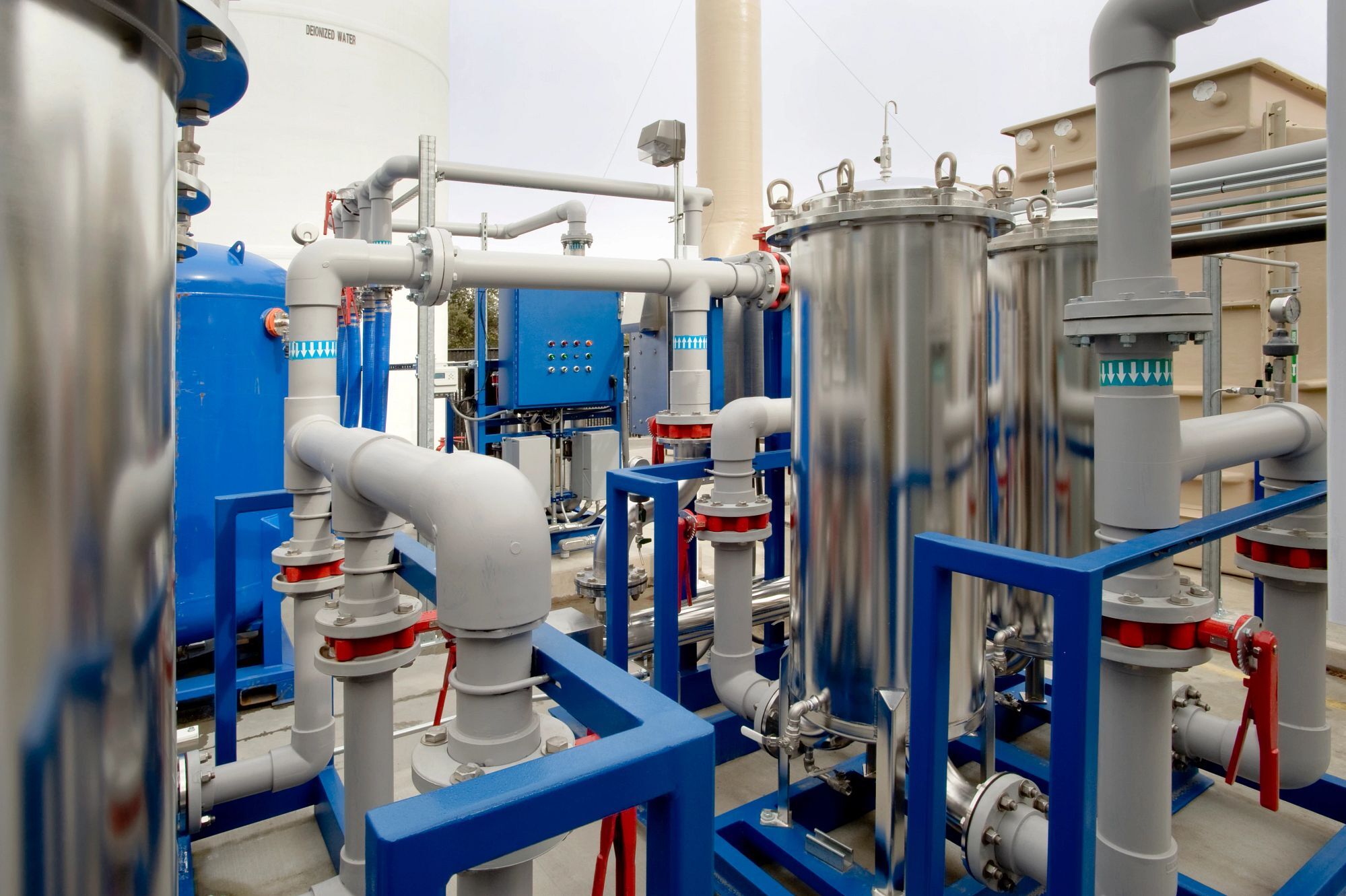
Regulation 31 of The Water Supply (Water Quality) Regulations 2016 is the primary piece of legislation governing which substances, chemicals, and construction products are permitted to come into contact with public drinking water supplies in England and Wales.
Administered by the Drinking Water Inspectorate (DWI) on behalf of the Secretary of State for Environment, Food and Rural Affairs (Defra), it creates a mandatory pre-approval system: no water undertaker or licensed supplier may introduce any substance or product into water intended for public consumption unless that product has been formally approved, or meets another specific exemption set out in the regulation.
The regulation is directly relevant to water companies, their contractors, and any manufacturer or supplier whose products are used anywhere in the treatment and distribution chain, from the source of the water all the way to the point where it is delivered to a consumer's boundary. It exists to protect public health by ensuring that nothing introduced into the water supply causes harm through tainting by taste, odour, or the leaching of harmful substances. Non-compliance is a criminal offence, making it one of the more serious regulatory obligations in the UK water sector.
1. What does Regulation 31 prohibit?
Regulation 31 prohibits water undertakers and licensed water suppliers from applying or introducing any substance or product into water intended for human consumption unless at least one of the following conditions is met:
- The Secretary of State has approved the product.
- The product conforms to an appropriate British Standard (or equivalent) that provides an equivalent level of protection.
- The substance is being used solely for testing or research, with at least three months' written notice given to the Secretary of State.
In practical terms, this means that before a product — whether a treatment chemical, a pipe, a coating, a membrane, or a construction material — can legally be used in contact with public drinking water, it must go through a formal approval process and appear on the DWI's List of Approved Products. The prohibition applies across the entire supply chain, from water treatment works through to the point of delivery at the boundary of a consumer's premises (which is where UK Regulation 4 takes over).
2. Who does Regulation 31 apply to?
As mentioned above, the primary legal duty falls on water undertakers (i.e., licensed water companies) and wholesale licensees, who are responsible for ensuring that only approved products are used within their networks. However, the practical compliance burden extends throughout the supply chain:
- Contractors and engineers working on water infrastructure.
- Product manufacturers and suppliers.
- Technology companies whose equipment comes into contact with treated water.
It is the responsibility of the product or technology company to ensure DWI approval has been obtained before their product is used by a water undertaker. The regulation covers all products used from the source of the water up to (but not including) the point of delivery to a consumer's building.
3. What types of products require Regulation 31 approval?
A wide range of products are covered. Common categories include:
- Treatment chemicals — coagulants, disinfectants, pH adjustment agents.
- Construction materials — pipes, coatings, linings, jointing materials.
- Membranes and filtration products.
- Any other equipment or material that comes into sustained contact with drinking water.
The regulation covers anything that could reasonably affect water quality through chemical leaching, tainting, or the promotion of microbial growth.
There are two tiers of approval depending on the nature of a product's contact with water:
- Full approval — for products with substantial, prolonged contact; requires full toxicological assessment and leaching tests.
- Small surface area route — for products with only transient or minimal contact; requires demonstration that the product does not cause unintended odour or flavour and does not support microbial growth.
Products falling clearly within an appropriate British or European Standard (such as certain treatment chemicals) may also be used—pending appropriate evaluation—provided the relevant conditions of use are met.
4. Who administers the approval process, and how does it work?
The approval process is run by the Drinking Water Inspectorate (DWI) on behalf of the Secretary of State. Applications are submitted through the DWI's online portal, which guides applicants through an interactive process to ensure all required information is provided.
The key steps are:
- Submit application via the DWI online portal.
- Tier 1 fee is charged upon receipt.
- DWI assessment — focused solely on whether the product could harm water quality or consumer health (not fitness for purpose).
- Leaching tests may be required by an accredited laboratory who will provide a report for submission to the DWI.
- Approval granted — product is added to the List of Approved Products (LOAP).
- Approval valid for five years, after which re-approval is required.
5. Does Regulation 31 approval mean a product is fit for purpose?
No. This is an important distinction, particularly for procurement and specification teams.
DWI approval confirms only that a product will not adversely affect drinking water quality or pose a risk to human health when used as directed. It does not constitute any endorsement of:
- Technical performance.
- Durability.
- Suitability for a specific engineering application.
A product appearing on the DWI's List of Approved Products should not be interpreted as a recommendation or quality mark beyond the specific scope of water safety. Water companies and their contractors should conduct their own technical due diligence in parallel with checking Regulation 31 status.
6. How long does approval last, and what happens at re-approval?
Approvals are valid for five years from the date of issue. Key points to be aware of:
- Re-approval must be submitted before the expiry date. If processed in time, the new five-year period runs from the original expiry date, not the re-approval date.
- If the expiry date lapses while re-approval is still under review, the product is removed from the approved list until approval is granted.
- Any changes to a product's formulation (including source chemicals), manufacturing process, name, or branding must be communicated to DWI.
7. What is the difference between Regulation 31 approval and WRAS approval?
These are two separate regimes that cover different parts of the supply network and are frequently confused.
| Regulation 31 | Regulation 4 |
Covers | Water company infrastructure | Consumer's internal pipework and fittings |
Boundary | Source to premises boundary | After the point of supply |
Administered by | DWI | Approval may be provided by voluntary schemes like NSF Reg4, WRAS, etc. |
Legal basis | Water Supply (Water Quality) Regulations 2016 | Water Supply (Water Fittings) Regulations 1999 |
The two approvals are not interchangeable, so holding one does not satisfy the requirements of the other. Some products (such as certain pipework or connectors) may need to be tested and listed under both schemes if they are used on both sides of the supply boundary.
Manufacturers and suppliers should identify exactly where in the chain their product will be used before choosing an approval route.
8. Does Regulation 31 apply in Scotland and Northern Ireland as well?
Regulation 31 of the Water Supply (Water Quality) Regulations 2016 applies specifically to England and Wales. Equivalent provisions exist across the UK under different instruments:
|
Nation |
Regulation |
Instrument |
|
England |
Regulation 31 |
Water Supply (Water Quality) Regulations 2016 |
|
Wales |
Regulation 31 |
Water Supply (Water Quality) Regulations 2018 |
|
Scotland |
Regulation 33 |
Public Water Supplies (Scotland) Regulations 2014 |
|
Northern Ireland |
Regulation 33 |
Water Supply (Water Quality) Regulations (NI) 2017 |
The DWI administers approval on behalf of both England and Wales, so a single DWI approval generally covers both nations. Scotland and Northern Ireland have their own separate approval processes, and manufacturers seeking to supply products across the whole of the UK should confirm requirements in each jurisdiction independently.
9. What are the consequences of non-compliance with Regulation 31?
Non-compliance with Regulation 31 can have criminal implications. The DWI has a range of enforcement powers, including:
- Formal warning letters.
- Prohibition notices preventing use of a product.
- Prosecution of water undertakers or licensees.
Approval can be revoked at any time if DWI finds that a product no longer meets required standards, that incorrect information was provided, that unauthorised product changes were made, or that conditions of approval were not followed.
When withdrawals occur, DWI issues formal notification letters to the industry and affected organisations are expected to cease use immediately.
10. Where can I find the current list of approved products and apply for approval?
- List of Approved Products (LOAP) — The DWI maintains the Secretary of State's List of Approved Products — the definitive reference for all Regulation 31-approved products
- Applying for approval — Applications for new approvals, re-approvals, and product changes are all submitted through the DWI's online application system. The DWI also publishes a series of Advice Sheets providing detailed guidance for different product types.
Contact NSF for testing support
During the application process, DWI will inform you about what tests are required for your products, from which point you can reach out to a DWI-designated laboratory for this service.
NSF has a laboratory in Oakdale, Wales, that offers the full suite of testing services required for Regulation 31 compliance. We’d be happy to assist you when you get to this stage.
This FAQ provides a general overview of Regulation 31 and should not be taken as legal advice. For product-specific guidance, consult the DWI's Advice Sheets.
Contact us today to discuss your specific product and testing needs
What’s New with NSF

NSF Welcomes Nicole Parent Haughey to Board of Directors
September 10, 2026NSF's appointment of Nicole supports the organisation's continued focus on long-term growth and transformation.
GRSO (RIOS) and NSF Announce Strategic Alliance to Strengthen RIOS Compliance Infrastructure Across India
August 31, 2026This milestone marks the successful completion of the RIOS Auditor Course by NSF’s team in India and the establishment of a robust regional compliance infrastructure to support organizations seeking RIOS certification.
NSF Launches Independent Certification Standard for Compact Products
August 25, 2026New third-party certification verifies products cutting materials and shipping impacts while maintaining safety and performance.
NSF Achieves European Accreditation for Drinking Water Product Certification Ahead of 2027 EU Deadline
July 22, 2026The ISO/IEC 17065 accreditation from BELAC complements NSF’s testing capacity, enabling end-to-end support for EU Drinking Water Directive (DWD) readiness ahead of the January 2027 deadline.