Treatment Chemical Contact Products: NSF/ANSI/CAN 61 Sections 5 and 8 Differences

While it is best known as the health effects standard for potable water, the scope of NSF/ANSI/CAN 61 also covers materials or products that come in contact with drinking water treatment chemicals.
This is important because contaminants that leach into drinking water treatment chemicals may then be inadvertently dosed into drinking water and eventually end up at a consumer’s tap, creating the potential for adverse health effects.
The drinking water treatment chemical-contacting products that are most typically certified under NSF/ANSI/CAN 61 include:
- On-site chemical generators
- Chemical feeders and metering pumps
- Chemical storage tanks
These product types all fall under Section 8 of the standard and must be tested with the drinking water treatment chemical or mixture of chemicals to which they are exposed in the field.
For example, complete chemical generation devices are tested by operating the device per the manufacturer’s instructions until the target dose level of chemical is achieved. The unit is subsequently turned off for a four-hour period. Then the unit is powered back on, and a sample of chemical equivalent to the system volume is collected. Components of chemical generators, chemical feeders, chemical metering pumps and chemical storage tanks are tested via a four-hour static exposure of the product’s chemical contact surfaces with the appropriate chemical or chemical mixture.
Leaching profiles from materials in contact with drinking water treatment chemicals can differ significantly when compared to the same materials in contact with other chemicals or potable water. For this reason, water treatment chemical contact products are certified and listed for use with specific chemical types and concentrations.
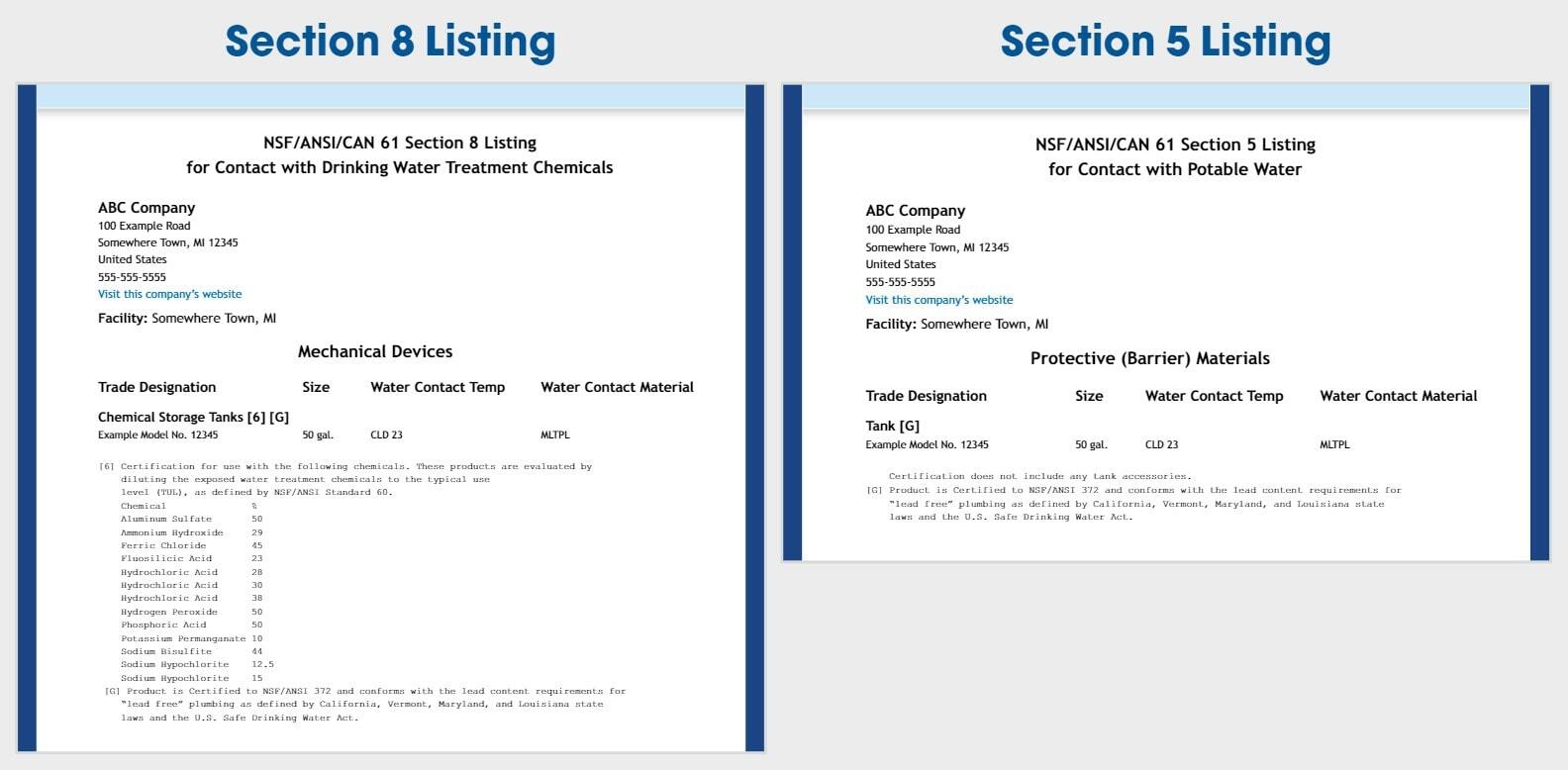
For products that may contact multiple different types of water treatment chemicals, such as chemical metering pumps and chemical storage tanks, the manufacturer must provide a complete list of chemicals with which they’d like their product evaluated. Use with any water treatment chemical other than those shown in the product listing is not covered by the scope of the certification. Similarly, tanks listed for storage of potable water under Section 5 of the standard have not been evaluated for use in chemical storage unless specifically indicated in a separate, Section 8 listing for chemical storage.
How Do I Differentiate These Products in the NSF Listings?
The mock-ups below show how the same product can be certified under Section 5 and Section 8 of NSF/ANSI/CAN 61 in NSF’s official certification listings. The listings for chemical evaluation (Section 8) and potable water (Section 5) are separate, even if the same product is being evaluated.
Ready to Begin the Process?
How NSF Can Help You

What’s New with NSF
NSF Launches Protocol 549 for Glyphosate Reduction Claims
October 14, 2026P549 is the first standard globally that validates glyphosate reduction performance of water filtration systems and products.
NSF Welcomes Hanjun Kwon, Managing Director, APAC
September 14, 2026Experienced business leader to drive sustainable growth, organisational development and operational excellence across the Asia-Pacific region.
NSF Welcomes Nicole Parent Haughey to Board of Directors
September 10, 2026NSF's appointment of Nicole supports the organisation's continued focus on long-term growth and transformation.
NSF Launches Independent Certification Standard for Compact Products
August 25, 2026New third-party certification verifies products cutting materials and shipping impacts while maintaining safety and performance.