72% of Consumers Consider Organic Ingredients Important in Personal Care Products

GUELPH, On. — NSF, a leading global public health and safety organization, has released new consumer data that demonstrates the importance of health and sustainability in personal care purchasing habits.
“NSF’s survey results clearly indicate that today’s consumers are seeking clean beauty products made with organic, toxin-free ingredients,” said Roxanne Beavers, Senior Technical Reviewer on NSF’s Product Certification team. “Despite this growing demand, consumer trust in voluntary organic labels is lacking, underscoring the importance of third-party testing and certification.”
NSF commissioned TGM Research to conduct the survey among 1,000 Canadians in 2024. Questions specifically focused on personal care products such as skincare, cosmetics, soaps and shampoos.
Key findings:
- Organic ingredients matter: 72% of consumers consider organic ingredients important in personal care products. Meanwhile, 66% of consumers want to see a clear ingredients list to identify potentially harmful ingredients.
- Consumers don’t trust voluntary labels: Only 5% of Canadians completely trust voluntary labels – among older consumers (ages 60 to 75), this shrinks to 2%.
- Personal care product purchasing is driven by health and environmental impact: The top incentives for buying organic in this category include “better for personal health,” “less processed and less chemicals” and “better for the environment.”
- Paying a premium for organic is acceptable: 36% of survey respondents are willing to pay more for certified personal care products with organic ingredients. Younger consumers (ages 18 to 29) are even more willing at 46%.
In 2009, NSF introduced NSF/ANSI 305: Personal Care Products Containing Organic Ingredients (NSF/ANSI 305), one of the only consensus-based standards for the growing product category.
Today, NSF/ANSI 305 is considered a best practice by the Organic Trade Association and is listed by major retailers such as Whole Foods Market as a credible validation for personal care products. In Canada, organic regulations only apply to food, so consumers must look for alternative certifications for personal care products, such as NSF/ANSI 305 or the United States Department of Agriculture’s National Organic Program (NOP). Because the NOP’s organic regulations were designed for food, it is often challenging for personal care products to be certified organic as they contain non-food ingredients and undergo complex manufacturing processes.
Quality Assurance International (QAI), an NSF company and industry leader in the organic sector, certifies products to confirm they follow strict production and labelling requirements. To earn certification to NSF/ANSI 305, a manufacturer must undergo thorough technical reviews and on-site inspections of the products, labels and facilities to verify that the product contains a minimum organic content of 70% by weight. All other ingredients must meet strict review criteria, including being GMO-free. Certified products are listed publicly on the QAI website.
“NSF’s research proves that consumers also want to see more organic options when selecting personal care products, further validating why certification to NSF/ANSI 305 is so valuable,” added Beavers.
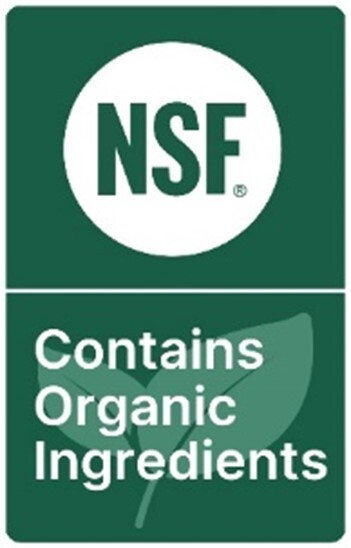
Consumers who see the NSF/ANSI 305 “Contains Organic Ingredients” mark on personal care products can rest assured that the product has met the standard’s stringent requirements. The mark was recently updated to provide greater clarity to consumers.
In addition to NSF/ANSI 305, QAI certifies products to organic standards in Canada, the United States, Mexico and the European Union. It also supports companies across the supply chain exporting organic products to Asian markets.
Learn more about NSF/ANSI 305

About NSF
NSF is an independent, global services organization dedicated to improving human and planet health for more than 80 years by developing public health standards and providing world-class testing, inspection, certification, advisory services and digital solutions to the food, nutrition, water, life sciences and consumer goods industries. NSF has 40,000 clients in 110 countries and is a World Health Organization (WHO) Collaborating Center on Food Safety, Water Quality and Medical Device Safety.
How NSF Can Help You

What’s New with NSF

Information Systems Security Association (ISSA) Welcomes NSF’s Brian Schultz into the 2026 Hall of Fame
September 10, 2026Lifetime achievement recognition honors exceptional leadership and lasting contributions to the cybersecurity profession.
NSF Welcomes Nicole Parent Haughey to Board of Directors
September 10, 2026NSF's appointment of Nicole supports the organization's continued focus on long-term growth and transformation.
NSF Launches Independent Certification Standard for Compact Products
August 25, 2026New third-party certification verifies products cutting materials and shipping impacts while maintaining safety and performance.
NSF Achieves European Accreditation for Drinking Water Product Certification Ahead of 2027 EU Deadline
July 22, 2026The ISO/IEC 17065 accreditation from BELAC complements NSF’s testing capacity, enabling end-to-end support for EU Drinking Water Directive (DWD) readiness ahead of the January 2027 deadline.