What It Takes To Become a Third-Party Auditor in the Aerospace Industry
When quality, safety, and reliability matter most, learn about the role of an AS9100 series auditor. Discover the training and experience that’s needed for those seeking a rewarding role that helps keep standards high in the aerospace industry.
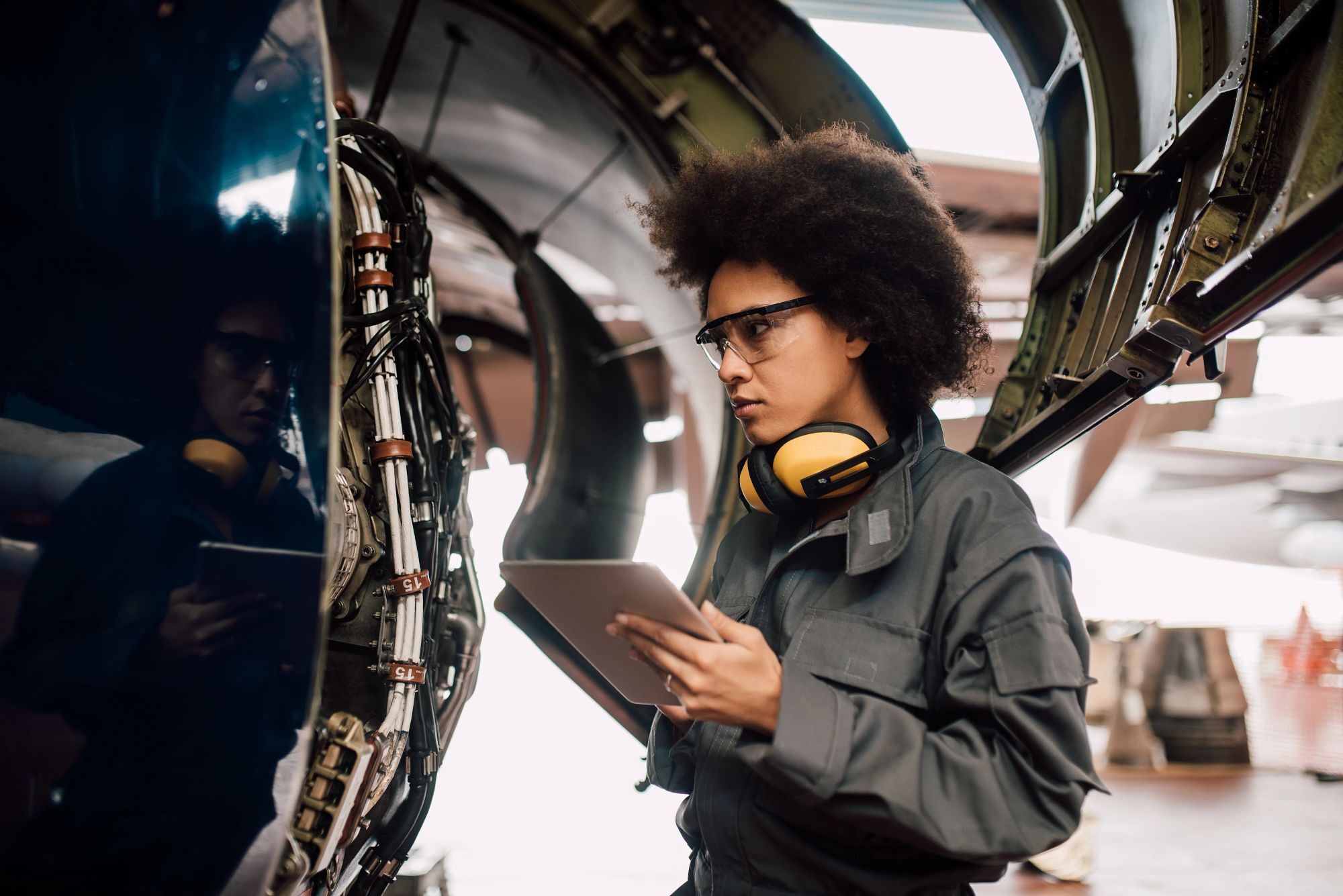
The aviation industry demands the highest levels of quality, safety, and reliability. To ensure these standards are met, organizations must comply with the internationally recognized AS9100 series quality management system (QMS) standards for aerospace. AS9100 auditors play a crucial role in this process, assessing companies to verify compliance and improve their quality systems.
If you have a technical background or engineering experience and want to transition into a career in third-party auditing, this article will explain what the job entails, walk you through the steps to becoming an auditor and show why it can be a fulfilling career.
What is an AS9100 auditor?
Most auditors assessing quality management systems in the aerospace industry are qualified to audit against the AS9100 series of standards. An AS9100 auditor is a quality professional responsible for evaluating an organization’s adherence to the AS9100 standard. This role involves performing several key activities. These include:
- Conducting audits of aerospace companies.
- Reviewing processes, documentation, and records to verify compliance.
- Identifying non-conformities and areas for improvement.
- Assisting organizations in maintaining and improving their QMS.
- Ensuring regulatory and industry requirements are met.
Steps to becoming an AS9100 auditor
- 1
Gain relevant industry experience
AS9100 auditors need to have worked four years within the past 10, full-time in the aerospace industry and have been directly involved in engineering, design, manufacturing, quality or process control for a major airframe manufacturer, prime supplier, auxiliary equipment supplier and/or appropriate official civil, military or space organization. Some common backgrounds include direct involvement with:
- Aerospace industry quality.
- Regulatory and/or military aerospace requirements.
- First article inspection, airworthiness, and safety requirements.
- Foreign object damage/debris (FOD) prevention program.
- Design development verification and validation.
- Aerospace sub-contractor approval and control, and flow-down of AQMS requirements.
- Variation management of key characteristics.
- Calibration controls and positive recall system.
- Acceptance authority media.
- Nonconforming material management.
- Sampling inspection/statistical process control requirements and limitations.
- Configuration management/requirements control.
- Manufacturing techniques, tool control.
- Aerospace material traceability requirements.
Many auditors start as quality engineers or quality managers before transitioning into auditing.
- 2
Become a Quality Management System (QMS) auditor
Becoming a QMS auditor (ISO 9001) is the first step in becoming an AS9100 auditor.
- Complete an accredited ISO 9001:2015 lead auditor course.
- Apply to a nationally recognized auditor authentication body.
- Begin conducting ISO 9001:2015 audits for an accredited certification body such as NSF.
Auditing is a skill that improves with experience. New auditors often start as part of an audit team and work under experienced auditors.
- 3
Learn the AS9100 standard and supporting standards
Familiarity with AS9100, AS9101, and ISO 17021 is essential. You can gain knowledge through:
- Reading the AS9100 standard (AS9100D is the latest version).
- Reading the AS9101 standard (Revision F is the latest version).
- Reading the ISO/IEC 17021-1 standard (Revision 2015 is the latest version).
- Attending AS9100 training courses.
- Studying ISO 9001 principles, since AS9100 builds on them.
A deep understanding of the standards clauses, documentation requirements, and audit principles is necessary to be effective in this role.
- 4
Complete AS9100 training
To become a certified AS9100 auditor, you must complete an IAQG Sanctioned Aerospace Auditor Transition Training (AATT) course led by an IAQG-approved training provider. These courses cover:
- How to audit to the AS9100 series standards.
- Process-based approach auditing of AS9101F.
- Non-conformity identification and reporting.
- 5
Obtain auditor certification
After completing training, you can pursue formal certification as an AS9100 auditor. To become certified, you will need to:
- Complete a minimum of four full QMS audits conducted for a total of 20 audit person days within the past three years.
- Pass the Aerospace Auditor Transition Training AATT course requirement.
- Apply to an Aerospace Auditor Authentication Body.
Once certified through the Aerospace Auditor Authentication Body, you will be placed in the OASIS Database as an Authenticated Aerospace Auditor.
- 6
Becoming a third-party auditor
Third-party auditors work for certification bodies such as NSF, which issues AS9100 certifications. Third-party auditors travel frequently and assess multiple companies, making this an excellent career path for those who enjoy variety and professional challenges.
NSF runs a professional development program for those wishing to take a new career path as an aerospace auditor. Contact our team if you are interested in learning what this could mean.
Although no two days are the same, keep reading to see what a typical day could include.
A day in the life of an AS9100 aerospace auditor
A typical day as an AS9100 auditor varies depending on the type of audit and the organization being assessed. However, the general process includes:
Audit preparation
- Reviewing audit scope and objectives.
- Analyzing previous audit findings and company documentation.
- Preparing audit checklists and interview questions.
Conducting the audit
- Holding an opening meeting with company representatives.
- Reviewing QMS documentation and records.
- Observing production processes and interviewing employees.
- Identifying potential non-conformities and collecting evidence.
Reporting and closing meeting
- Summarizing findings and documenting non-conformities.
- Discussing opportunities for improvement with the company.
- Holding a closing meeting to present preliminary audit results.
- Preparing the final audit report for submission.
While some audits last a day, others may take multiple days or even weeks for large aerospace manufacturers.
Why being an aerospace auditor is a rewarding career
Make a positive impact on aerospace quality and safety
Aerospace auditors play an important role in ensuring that aerospace products meet the highest standards. This contributes to the safety of aircraft, spacecraft, and defense systems.
Experience a diverse work environment
Auditors interact with different organizations, from small aerospace suppliers to large multinational manufacturers. This variety keeps the work engaging and challenging.
Career growth and high demand
With the aerospace industry’s strict regulatory requirements, AS9100 auditors are in demand worldwide. The role offers opportunities for career advancement and specialization in areas like defense contracting or space systems.
Opportunities for travel
For those who enjoy travel, auditing provides opportunities to visit aerospace facilities worldwide. Third-party auditors, in particular, work with companies in different countries. However, if you prefer to work in the same location each day, this might be something to think about.
Continuous learning and professional development
The aerospace industry constantly evolves, and auditors must stay updated on new regulations, technologies, and best practices. This ensures lifelong learning and career growth.
Could this be your next career move?
Becoming an aerospace auditor is an excellent career choice for many people, including engineers and quality professionals, who want to make a significant impact on aerospace manufacturing. By gaining industry experience, studying the standards, completing auditor training, and earning certification, you can develop a rewarding career ensuring the highest quality standards in aerospace.
Interested in learning more?
What’s New with NSF

Cambium Analytica, an NSF Company, Opens New Lab in Traverse City, Mich
October 6, 2026Ribbon cutting debuts innovative 15,000-square-foot testing facility to support evolving needs of the food & supplement industries.
NSF Drives Industry Conversations at SupplySide Global 2026 - Las Vegas, Oct. 26–30
September 17, 2026NSF returns to SupplySide Global with expert-led training and trusted certification solutions. Visit Booth 4741 to discover how NSF and Cambium Analytica help brands build trust, increase consumer confidence and stand out in a competitive marketplace.
NSF Welcomes Hanjun Kwon, Managing Director, APAC
September 14, 2026Experienced business leader to drive sustainable growth, organizational development and operational excellence across the Asia-Pacific region.
NSF to Exhibit and Present at PACK EXPO International
September 11, 2026NSF is proud to be part of PACK EXPO International 2026, the premier event bringing together packaging and processing leaders from across industries.