What NSF Standards Reference NSF/ANSI/CAN 61 — and What Does It Mean?
Understanding how other NSF standards connect to NSF/ANSI/CAN 61.
Most state drinking water regulations require that system components be third‑party certified to NSF/ANSI/CAN 61, the nationally recognized standard that evaluates the health effects of materials used in drinking water systems. Certification ensures that components do not leach harmful contaminants into the water supply.
NSF/ANSI 14: Plastics piping system components
Potable water products certified to NSF/ANSI 14 must also meet the material safety requirements of NSF/ANSI/CAN 61. Listings for these products (viewable here) include the footnote:
“Material complies with NSF/ANSI/CAN 61 health effects requirements when tested at 73°F [or 140°F or 180°F].”
NSF standards for water treatment devices
Many NSF drinking water treatment standards reference NSF/ANSI/CAN 61—or include their own material safety protocols of similar rigor. Requirements vary depending on whether the product is:
- Point‑of‑Entry (POE) - treats all water entering a building
- Point‑of‑Use (POU) - treats water at a specific tap or outlet
Standards for point‑of‑entry (POE) applications
The following NSF/ANSI standards require POE products to comply with NSF/ANSI/CAN 61, including the lead content requirements of NSF/ANSI/CAN 372:
- NSF/ANSI 42
- NSF/ANSI 44
- NSF/ANSI 53
- NSF/ANSI 55
- NSF/ANSI 401
Listings for POE products (viewable here) include this footnote:
“[POE] Product conforms to NSF/ANSI/CAN 61 health effects requirements.”
Standards for point‑of‑use (POU)
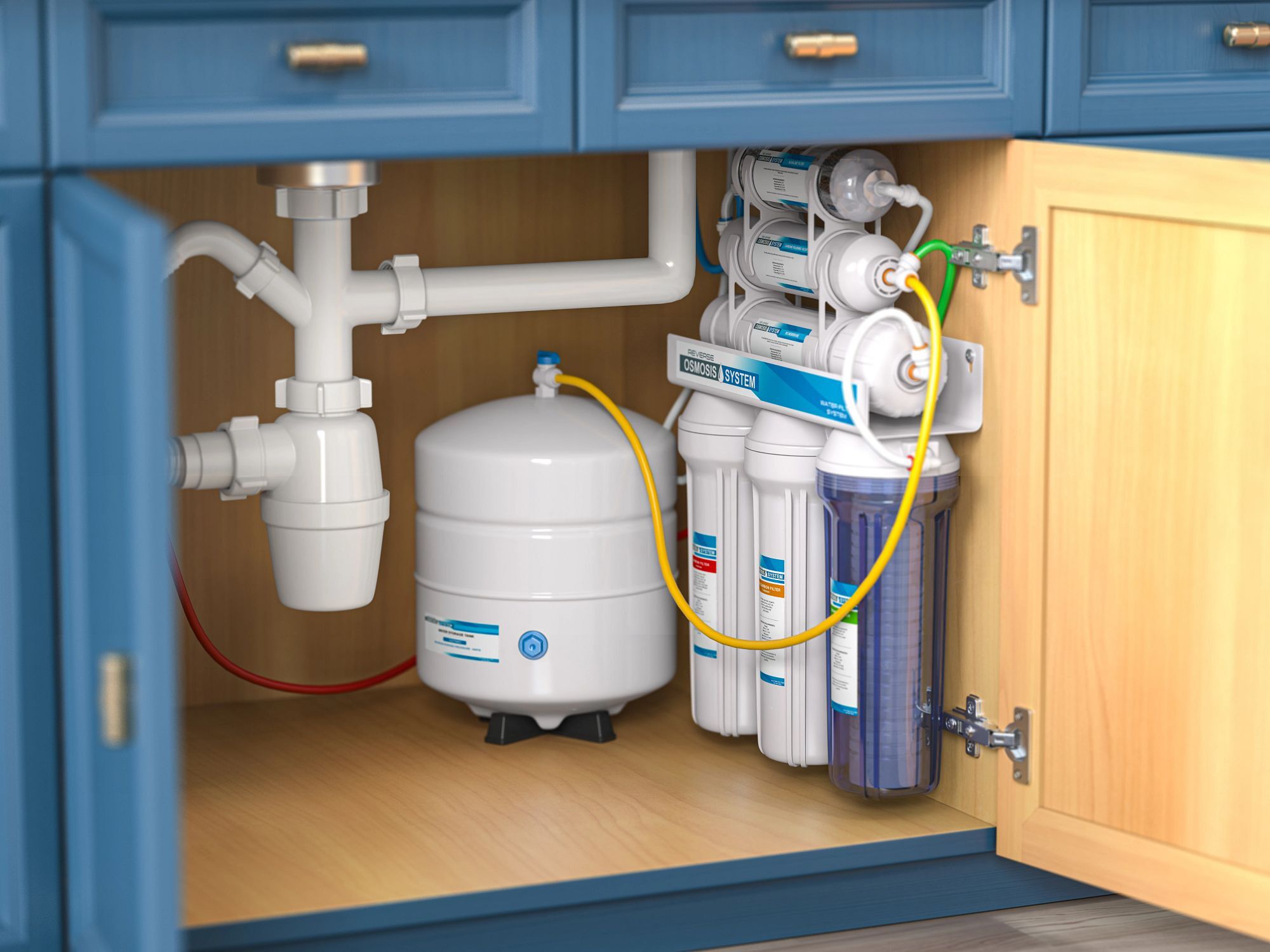
POU products certified under the standards below do not require compliance with NSF/ANSI/CAN 61:
- NSF/ANSI 42
- NSF/ANSI 53
- NSF/ANSI 55
- NSF/ANSI 58
- NSF/ANSI 401
Instead, these standards contain POU‑specific materials safety testing, which is why POU products are explicitly excluded from NSF/ANSI/CAN 61. POU devices must still comply with the lead content limits in NSF/ANSI/CAN 372.
Although their material safety testing differs, POU standards are equally protective. Their protocols are closely aligned with the material safety requirements of NSF/ANSI/CAN 61. A side-by-side comparison is shown below.
Material safety testing comparison: POU vs. POE
| Criteria | POU material safety testing in NSF/ANSI 42, 53, 55, 58, 401 | POE device material safety testing in NSF/ANSI/CAN 61 |
| Flushing instructions | Per manufacturer’s written instructions at an initial inlet pressure of 50 psig. | Per manufacturer’s written instructions at an initial inlet pressure of 50 psig. |
| Exposure water | Public water supply adjusted to 50 mg/L TDS, pH 6.75, 0.5 mg/L free chlorine | Multiple formulated waters: · pH 5, 2mg/L free chlorine for metals testing · pH 8 , 2mg/L free chlorine for metals and organics testing |
| Exposure and sample collection | 1. 24-hour exposure -> collect sample -> flush -> refill 2. 24-hour exposure -> collect sample -> flush -> refill 3. 24-hour exposure -> collect sample Composite three samples and analyze No flushing between sample collection and refills for reverse osmosis systems and membranes | 1. Conditioning for up to 14 days 2. 24-hour exposure -> discard -> refill (two cycles) 3. Final 12–16-hour exposure -> collect and analyze sample |
| Pass/fail criteria | Total allowable concentration from NSF/ANSI/CAN 600 | Total allowable concentration from NSF/ANSI/CAN 600 |
In addition to materials testing, standards 42, 44, 53, 55, and 58 also include requirements for structural integrity and performance claims, areas that fall outside the scope of NSF/ANSI/CAN 61.
- NSF/ANSI 14 – Plastics Piping System Components and Related Materials
- NSF/ANSI 42 – Drinking Water Treatment Units: Aesthetic Effects
- NSF/ANSI 44 – Residential Cation Exchange Water Softeners
- NSF/ANSI 53 – Drinking Water Treatment Units: Health Effects
- NSF/ANSI 55 – Ultraviolet Microbiological Water Treatment Systems
- NSF/ANSI 58 – Reverse Osmosis Drinking Water Treatment Systems
- NSF/ANSI/CAN 61 – Drinking Water System Components: Health Effects
- NSF/ANSI/CAN 372 – Drinking Water System Components: Lead Content
- NSF/ANSI/CAN 600 – Health Effects Evaluation and Criteria for Chemicals in Drinking Water
Need more information on NSF’s drinking water standards?
Complete the Contact Us form below and our team will be happy to help.
What’s New with NSF
NSF Launches Protocol 549 for Glyphosate Reduction Claims
October 14, 2026P549 is the first standard globally that validates glyphosate reduction performance of water filtration systems and products.
Cambium Analytica, an NSF Company, Opens New Lab in Traverse City, Mich
October 6, 2026Ribbon cutting debuts innovative 15,000-square-foot testing facility to support evolving needs of the food & supplement industries.
NSF Drives Industry Conversations at SupplySide Global 2026 - Las Vegas, Oct. 26–30
September 17, 2026NSF returns to SupplySide Global with expert-led training and trusted certification solutions. Visit Booth 4741 to discover how NSF and Cambium Analytica help brands build trust, increase consumer confidence and stand out in a competitive marketplace.
NSF Welcomes Hanjun Kwon, Managing Director, APAC
September 14, 2026Experienced business leader to drive sustainable growth, organizational development and operational excellence across the Asia-Pacific region.