Lead in Schools and Older Homes
Although rarely found in source water, lead can enter tap water through the corrosion of aging plumbing materials. The three primary sources of lead:
- Lead-containing service lines connected to public water systems, most often in schools built prior to 1950
- Lead solder used in copper piping systems prior to 1986
- Lead-containing brass or galvanized pipe and fittings that are not certified to the NSF/ANSI/CAN 61 standard; includes many products manufactured prior to the mid-1990s
In 2014, lead content standards were adopted in the US to limit the amount of lead manufacturers can use to construct plumbing fixtures. Current US laws limit the lead content of plumbing products to a weighted average of 0.25% or less.
How Is Water in Schools Tested for Lead?
EPA has established the 3Ts (Training, Testing, and Taking Action) approach for reducing lead in schools and childcare facilities. When testing for lead, a 250 mL sample should be collected from the outlet after water has not been used in the building for eight to 18 hours. The EPA established an action level of 10 ppb for lead, which would trigger remediation, but states or schools may have more stringent remediation triggers.
However, each state decides on the implementation and enforcement of the testing portion. Before testing any water for lead, please consult your local regulatory authority to learn your state’s or jurisdiction’s specific requirements.
Accredited Laboratories for Chemical Analyses of Drinking Water by State
Many states require a state-certified drinking water laboratory or a lab approved by the US EPA to test water samples for lead. The US EPA has compiled a list of approved water testing labs for each state.
NSF Drinking Water Plumbing Standards*
Plumbing products used for drinking water are covered under NSF/ANSI/CAN 61 and NSF/ANSI/CAN 372. Certification to either standard means the product does not contain lead exceeding the requirement in the Safe Drinking Water Act (0.25% weighted average lead content). Certification to NSF/ANSI/CAN 61: Drinking Water Treatment System Components – Health Effects ensures that faucets, fittings, valves, and other plumbing components are safe to come into contact with drinking water by evaluating
various harmful chemical contaminants, including lead, which may be introduced to the drinking water because of the materials used in the product. In contrast, NSF/ANSI/CAN 372: Drinking Water System Components – Lead Content only requires verification of the lead content based on the wetted surfaces of the products. NSF/ANSI/CAN 61 requires compliance with NSF/ANSI/CAN 372. Look for the NSF/ANSI/CAN 61 certification mark to ensure the faucet, housing, valve, pipe, fitting, and other plumbing components are certified for drinking water contact.
Where Can I Find Lead-Free Products?
You can find plumbing products that are NSF-certified as lead-free according to the US EPA requirements by searching our listings below:
You can also look for the NSF certification mark or standard number on a product or packaging to ensure you purchase a tested plumbing product. Certified products may be marked with NSF/ANSI/CAN 61-G, NSF® pw-G, NSF/ANSI/CAN 61, or NSF® pw. Products may also display the certification mark, such as the one below (either as a logo or text):

Where Can I Find Water Filters Certified by NSF?
Where Can I Find Water Filters Certified by NSF?
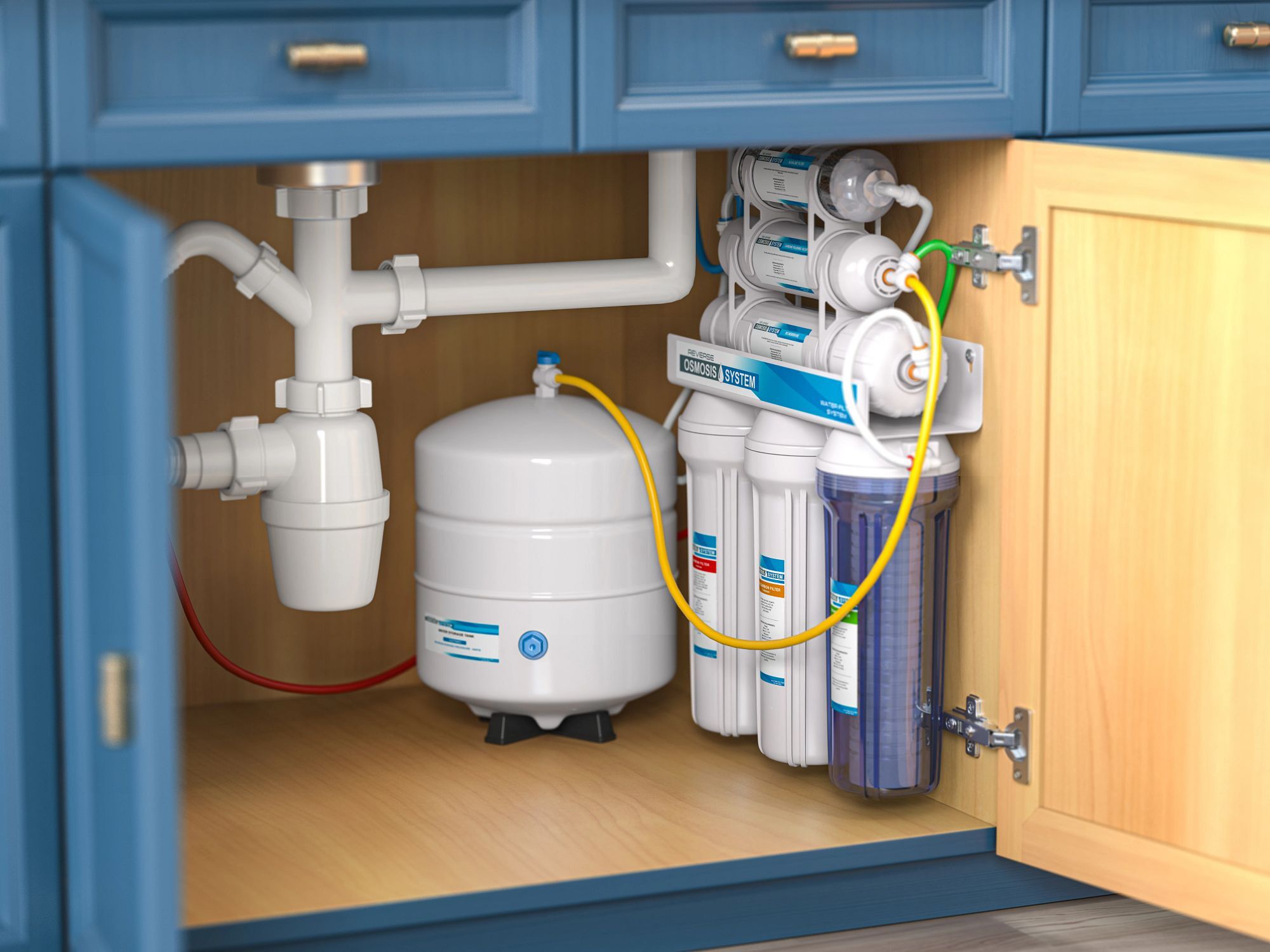
If your building’s water tests positive for lead, many NSF-certified filtration systems are available for purchase. Although many of these systems are meant to filter only a few gallons of water at a time, they can be kept in classrooms, break rooms, and refrigerators for drinking purposes. See below for specific kitchen water filtration systems, reverse osmosis water filter systems, and countertop filters certified to reduce lead.
Certified Filters by Type
What Does Lead-Free Mean?
Section 1417 of the Safe Drinking Water Act (SDWA) defines lead-free as a weighted average of 0.25% lead calculated across the wetted surfaces of a pipe, pipe fitting, plumbing fitting, and fixture, and 0.2% lead for solder and flux. The Act also provides a methodology for calculating the weighted average of wetted surfaces. The methods of evaluating products to these lead-free requirements are found in NSF/ANSI/CAN 372: Drinking Water System Components – Lead Content.
NSF Standards Development Process
Accredited by the American National Standards Institute (ANSI), NSF utilizes input from regulators (including the US EPA), consumers, academia, and industry to develop standards criteria.
About NSF and Its Role Certifying Plumbing Products
NSF is an independent, not-for-profit organization that facilitates the development of consensus-based national standards for the safety, health and performance of food, water, and consumer products. These standards help to minimize adverse health effects and protect the environment. This includes developing standards for drinking water treatment products, including plumbing supplies, and testing them to ensure compliance with NSF/ANSI and other consensus-based standards.
For example, NSF can verify that a plumbing component does not contribute harmful contaminants to drinking water.
To ensure objectivity and transparency, all NSF drinking water certification programs are accredited by ANSI (ANSI-Accredited Product Certification Body - Accreditation #2016). NSF/ANSI standards also receive public health ratification from NSF’s Council of Public Health Consultants, including government, academia, and public health representatives. To become certified, products used in homes and schools (e.g., water filters, faucets, and drinking fountains) are tested against these standards as a benchmark to ensure they are safe for use.
*Certification to these standards also means the product meets the US EPA’s regulations regarding lead-containing products. These plumbing products may be marked lead-free, which means they meet the EPA's requirement of under 0.25% weighted lead content.
If you suspect you may have lead in your water supply, take these steps to try to reduce your exposure:
- Run the kitchen and/or bathroom faucets for at least one minute in the morning or after coming home from school or work before getting a drink.
- Never use hot water for cooking or drinking since hot water leaches more lead than cold water.
- Never drink water from any faucet other than the kitchen or bathroom tap; these are the only faucets in the home required to meet current lead content standards.
If you are unsure if lead is an issue in your home, consider having a sample of your tap water tested. Your local water or health department may be able to help you locate a water testing lab in your area. If the detected level exceeds 0.010 mg/L (for Canada) or 0.015 mg/L (for the US), consider purchasing certified bottled water or use a filter certified for lead reduction until you can locate and eliminate the lead source in the water supply.
NSF has created a consumer guide to NSF-certified lead filtration devices for reducing lead in drinking water. The guide explains the NSF standards and how NSF verifies a filter’s capacity to reduce lead in drinking water. Some of the products listed in the guide may also be certified to reduce other contaminants besides lead.
How NSF Can Help You

What’s New with NSF
NSF Launches Protocol 549 for Glyphosate Reduction Claims
October 14, 2026P549 is the first standard globally that validates glyphosate reduction performance of water filtration systems and products.
Cambium Analytica, an NSF Company, Opens New Lab in Traverse City, Mich
October 6, 2026Ribbon cutting debuts innovative 15,000-square-foot testing facility to support evolving needs of the food & supplement industries.
NSF Drives Industry Conversations at SupplySide Global 2026 - Las Vegas, Oct. 26–30
September 17, 2026NSF returns to SupplySide Global with expert-led training and trusted certification solutions. Visit Booth 4741 to discover how NSF and Cambium Analytica help brands build trust, increase consumer confidence and stand out in a competitive marketplace.
NSF Welcomes Hanjun Kwon, Managing Director, APAC
September 14, 2026Experienced business leader to drive sustainable growth, organizational development and operational excellence across the Asia-Pacific region.