Consumer Confidence Reports
Suppose your water has an undesirable taste, odor, or color, or you want to learn more about water quality. In that case, you may want to look at your water quality report in detail to determine the cause of these issues. Water quality reports help you identify contaminants present in your tap water and how these may affect your health.
The US Environmental Protection Agency (EPA) requires most community water systems to provide customers with an annual water quality report or consumer confidence report (CCRs) that provide detailed information about the quality of your drinking water during the past year.
Most homeowners will automatically receive a copy of the report each year. People living in apartments or condominiums may not receive a copy directly, but can still access this information on their community's website or by calling the local water department.
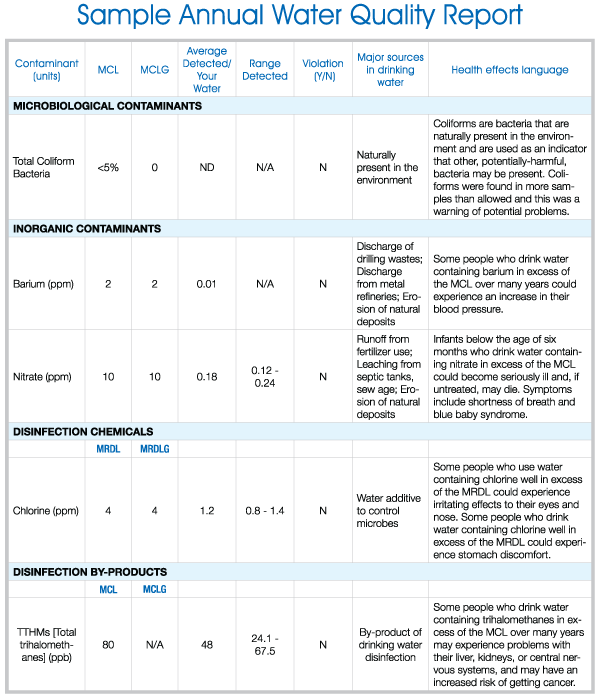
Water reports can look a little technical, but they are actually fairly easy to read once you know what to look for. Below is a sample water quality report.
Interpreting the Results of Your Report
As you can see in the graphic above, the water quality report contains important information about your drinking water. The key items to review include:
- Contaminant or parameter name – Refers to the particular substance being analyzed in the water, such as lead.
- Unit – Refers to the unit of measurement in which a particular contaminant is being reported, such as parts per million (ppm).
- MCLG – Maximum contaminant level goal. Indicates the minimum level of a contaminant allowed in drinking water below which there is no known or expected risk to health.
- MCL – Maximum contaminant level. Indicates the highest level of contaminant allowed in drinking water.
- Amount detected – The level at which the contaminant was detected in your water supply reported either as an average for the year or as a range.
- Violation – A yes in this column indicates your community had a contaminant present in the water that exceeded an MCL.
- Source – This column indicates the potential source of a particular contaminant, such as naturally present, an additive or the result of contamination from a particular form of business.
Comparing Your Water Results
To determine if a particular contaminant is present in your drinking water at a level that is near or exceeds federal or state guidelines, compare the level shown in the "Amount Detected" column to the level shown in the "MCL" column.
You can also compare the amount detected in your water supply to the level shown in the “MCLG” column. Remember that the MCLG level is a target goal, not a requirement. Water utilities must keep contaminant levels below the MCL level, but not below the MCLG level.
Questions About Government Regulations of Water Quality?
The US EPA's safe drinking water hotline at 1-800-426-4791 answers questions regarding the development of the MCL and MCLG levels shown on your report. The hotline staff can answer questions about federal drinking water standards and provide general information on water quality in the United States.
How to Improve Your Water Quality?
Suppose your water has a taste, odor, or color issue, or you are concerned about the presence of a particular contaminant and are considering using a water filter or home water treatment system. In that case, the Contaminant Reduction Claims Guide can help you locate a list of products certified to address that issue.
We evaluate hundreds of brands of water treatment devices each year to ensure they meet applicable safety, design, and/or performance standards. You can be confident that NSF-certified home water treatment solutions will reduce the contaminants as claimed by the manufacturer, without adding harmful levels of impurities into the water being treated.
How NSF Can Help You

What’s New with NSF
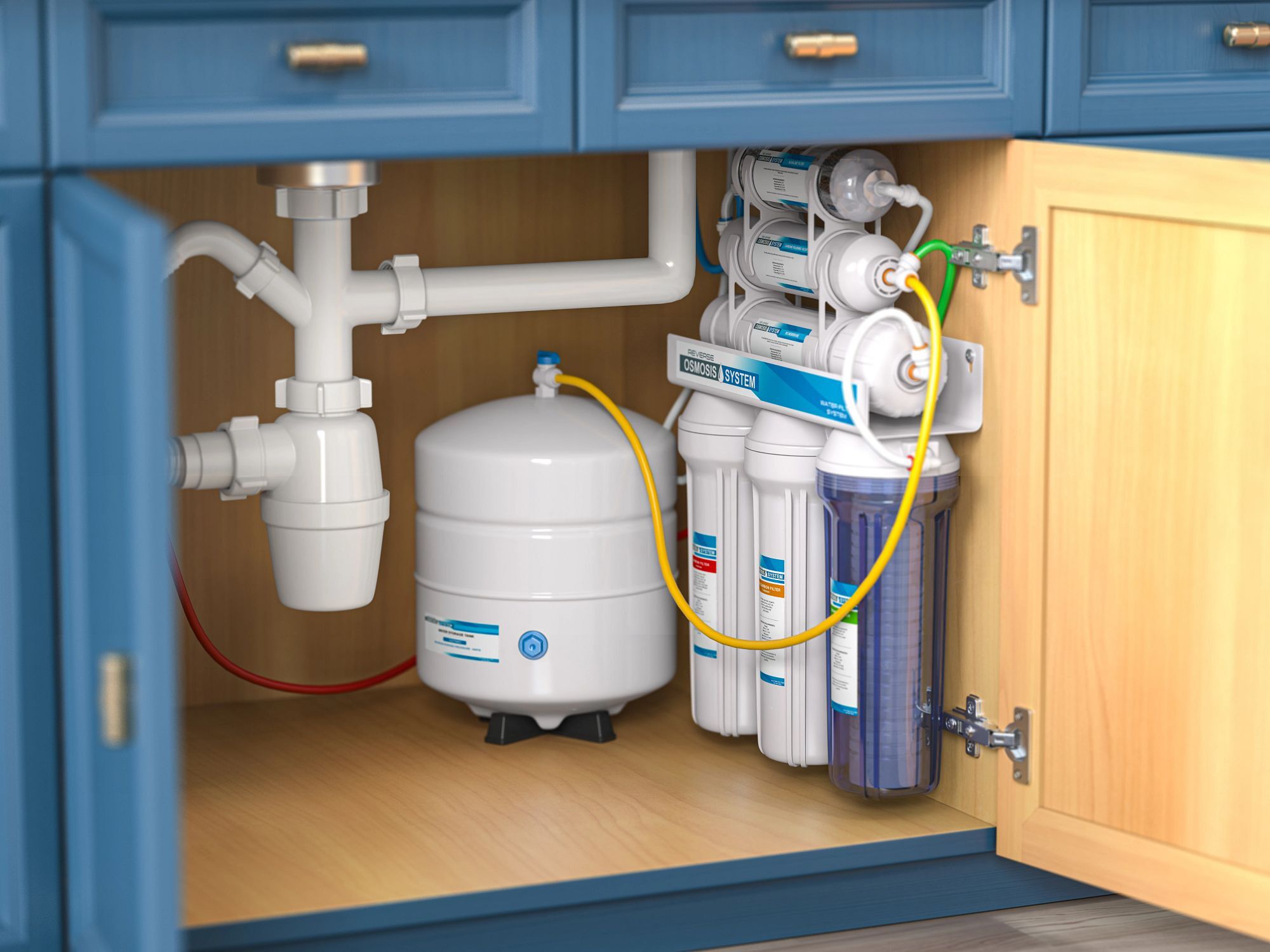
NSF Launches Protocol 549 for Glyphosate Reduction Claims
October 14, 2026P549 is the first standard globally that validates glyphosate reduction performance of water filtration systems and products.
Cambium Analytica, an NSF Company, Opens New Lab in Traverse City, Mich
October 6, 2026Ribbon cutting debuts innovative 15,000-square-foot testing facility to support evolving needs of the food & supplement industries.
NSF Drives Industry Conversations at SupplySide Global 2026 - Las Vegas, Oct. 26–30
September 17, 2026NSF returns to SupplySide Global with expert-led training and trusted certification solutions. Visit Booth 4741 to discover how NSF and Cambium Analytica help brands build trust, increase consumer confidence and stand out in a competitive marketplace.
NSF Welcomes Hanjun Kwon, Managing Director, APAC
September 14, 2026Experienced business leader to drive sustainable growth, organizational development and operational excellence across the Asia-Pacific region.