Certification Of Plastic Piping: NSF/ANSI 14 and NSF/ANSI/CAN 61

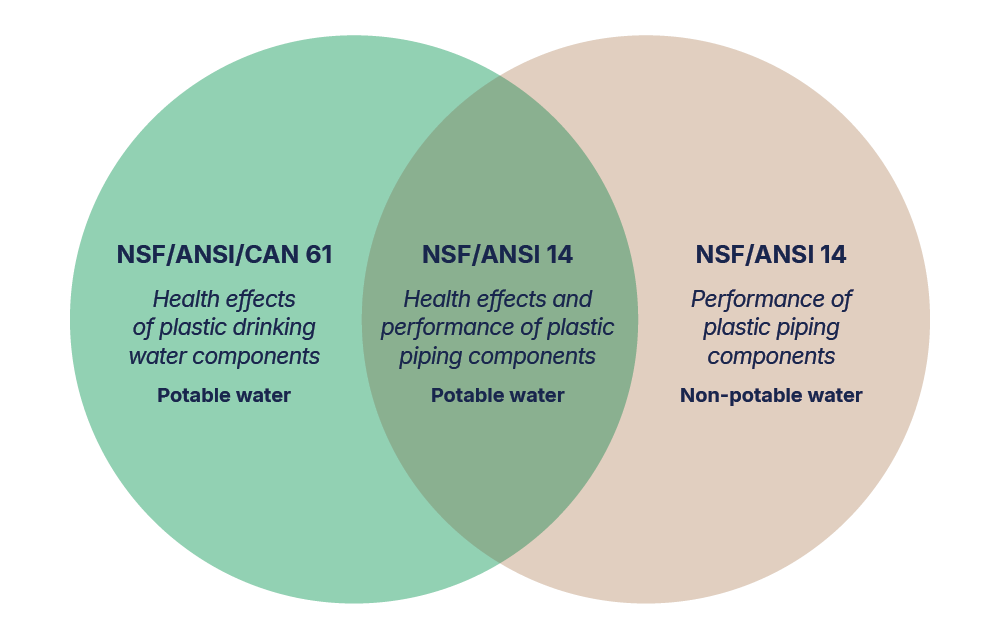
NSF/ANSI 14 and NSF/ANSI/CAN 61 are both standards related to plastic piping systems, but they focus on different aspects: NSF/ANSI 14 covers the performance and safety requirements for plastic piping system components and related materials while NSF/ANSI/CAN 61 focuses on the health effects of products, components, and materials that come into contact with drinking water.
Both standards apply to materials used in plastic piping systems, such as PVC, CPVC, PE, PEX, and others. Both standards emphasize the importance of quality assurance and testing to ensure the safety and performance of the materials used.
NSF/ANSI/CAN 61: Drinking Water System Components—Health Effects establishes the benchmark criteria for evaluating the health effects of many drinking water system components, including plastic piping.
NSF/ANSI 14: Plastics Piping System Components and Related Materials establishes the minimum physical, performance and health effects requirements for plastics piping system components and related materials.

How NSF Can Help You

What’s New with NSF

Cambium Analytica, an NSF Company, Opens New Lab in Traverse City, Mich
October 6, 2026Ribbon cutting debuts innovative 15,000-square-foot testing facility to support evolving needs of the food & supplement industries.
NSF Drives Industry Conversations at SupplySide Global 2026 - Las Vegas, Oct. 26–30
September 17, 2026NSF returns to SupplySide Global with expert-led training and trusted certification solutions. Visit Booth 4741 to discover how NSF and Cambium Analytica help brands build trust, increase consumer confidence and stand out in a competitive marketplace.
NSF Welcomes Hanjun Kwon, Managing Director, APAC
September 14, 2026Experienced business leader to drive sustainable growth, organizational development and operational excellence across the Asia-Pacific region.
NSF to Exhibit and Present at PACK EXPO International
September 11, 2026NSF is proud to be part of PACK EXPO International 2026, the premier event bringing together packaging and processing leaders from across industries.